

Filing a dog insurance claim is straightforward once you have done it a few times, but keeping track of every claim you have ever submitted is a different task entirely.
A dedicated dog insurance claim records log gives you one place to document each submission, monitor reimbursements, and store the paperwork your provider may ask about months down the line.
What This List Is For:
This list helps you build a complete dog insurance claim records log so that every claim you submit is documented, traceable, and easy to reference if questions arise.
📄 You can find a blank dog insurance claim records page inside the Dog Records Organizer, which you can personalize to your own needs.
Some dog owners store this sheet in the Expenses & Insurance Section of their organizer to keep essential dog record details easy to reference.
What Is A Dog Records Organizer?
A dog records organizer keeps all the important paperwork and details about your dog together in one organized place. For a full overview of how the system works, visit our Dog Records Checklist guide.
Below are the details typically included in a dog insurance claim records log.
Information to Include in a Dog Insurance Claim Records Log
Basic Claim Information
Every entry in your dog insurance claim records log should start with the core details that identify the claim.
These are the fields your insurance provider will reference if you call to follow up.
- Date of veterinary visit
- Name of veterinary practice
- Treating veterinarian’s name
- Reason for the visit or diagnosis as recorded on the invoice
- Date the claim was submitted
- Submission method used (app, email, mail, fax, or online portal)
- Claim reference number assigned by the provider
Recording this information at the time of submission takes only a few minutes and prevents you from searching through emails or app histories later.
Financial Details for Each Claim
Tracking the financial breakdown of every claim helps you verify that reimbursements match your policy terms and monitor your annual deductible progress throughout the year.
- Total amount on the veterinary invoice
- Amount applied to your deductible
- Amount submitted for reimbursement
- Reimbursement percentage applied
- Amount approved by the provider
- Amount paid out to you
- Date reimbursement was received
- Payment method (direct deposit or check)
Keeping a running total of these figures across all claims also makes your annual insurance review much easier.
You might also want to include any claims on your monthly or annual dog expense tracker.
Dog Insurance Claim Status Tracking
Claims move through several stages between submission and payment.
A status column in your dog insurance claim records log lets you see at a glance which claims are complete and which still need attention.
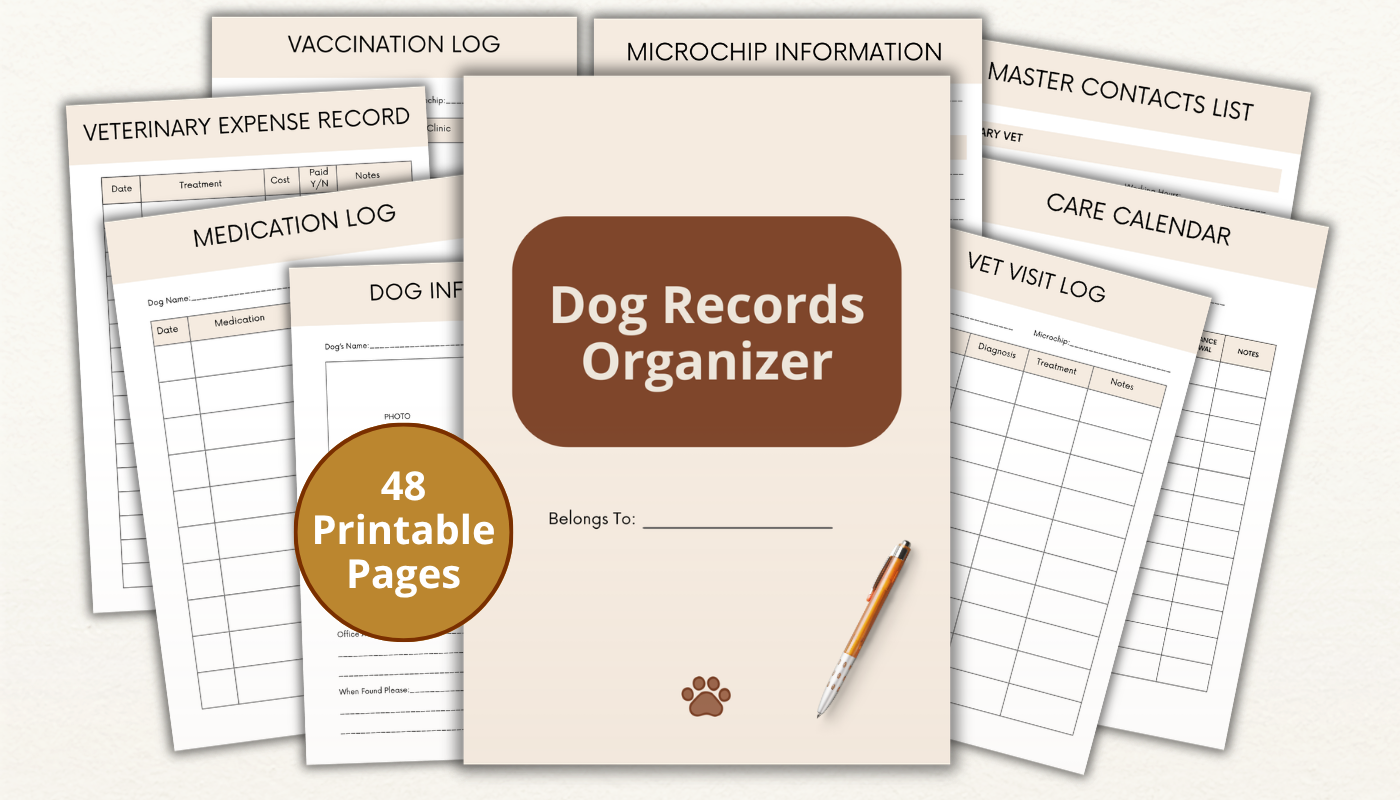
Want a Ready Made Version?
The Dog Records Organizer consists of 27 printable checklists and trackers - over 48 pages - to help keep your dog records neatly organized in one safe place.
Learn More About The Organizer- Submitted and awaiting acknowledgment
- Under review
- Additional documents requested
- Approved and payment initiated
- Paid and closed
- Denied or partially denied
- Under appeal
If a claim has been sitting in one status for longer than expected, this section gives you the reference details you need when you call your provider to follow up.
Supporting Documents Checklist Per Claim
Each claim requires a specific set of supporting documents.
Tracking which documents you gathered and submitted for each individual claim protects you if the provider requests missing paperwork or disputes a submission later.
- Itemized invoice from the veterinary practice
- Proof of payment showing a zero balance
- SOAP notes or medical records from the treating vet
- Completed claim form if required by your provider
- Referral letter from your primary vet if a specialist was involved
- Photos or additional evidence if requested
- Copy of submitted documents retained for your own records
Keeping this checklist per claim rather than per policy year means you always know exactly what was filed for each visit.
Denied and Partially Denied Claim Records
Not every claim is approved in full, and keeping a separate record of denials and partial payments gives you a clear picture of your policy’s real-world coverage.
It also preserves the information you need if you decide to appeal.
- Claim reference number
- Date of denial or partial denial notice
- Reason given by the provider for the denial
- Policy exclusion cited if applicable
- Whether an appeal was filed
- Date of appeal submission
- Outcome of the appeal
- Final amount paid after appeal if applicable
A denial record is not a cause for concern on its own; it is simply an accurate record of how your policy has performed over time.
Appeal Records
If you have ever disputed a claim decision, keeping a dedicated appeal record ensures that all correspondence and outcomes are documented in one accessible place.
- Original claim reference number
- Date appeal was submitted
- Method of appeal submission
- Name of representative spoken to if applicable
- Supporting documents included with the appeal
- Date appeal acknowledgment was received
- Date of final appeal decision
- Outcome and amount paid if approved
Appeals can take several weeks to resolve, and having a dated record of each step protects you throughout the process.
Annual Claim Summary
A year-end summary of your dog insurance claim records gives you the information you need to assess whether your policy is delivering value and whether any changes are worth making at renewal.
- Policy year dates
- Total number of claims submitted
- Total veterinary costs across all claims
- Total amount reimbursed
- Total out-of-pocket costs after reimbursement
- Number of claims denied or partially denied
- Deductible met or remaining at year end
- Notes on coverage gaps identified during the year
Reviewing this summary at renewal puts you in a much stronger position when comparing your current plan against alternatives.
Correspondence Log
Insurance claims sometimes involve follow-up calls, emails, or chat sessions with your provider.
A brief correspondence log connected to each claim ensures that any commitments made by the provider are documented.
- Date of contact
- Name of representative if provided
- Method of contact (phone, email, online chat)
- Claim reference number discussed
- Summary of the conversation
- Any follow-up action required
- Date follow-up was completed
A correspondence log is particularly useful if a claim is delayed, disputed, or requires escalation.
Wellness Claim Records
If your policy includes a wellness or preventive care add-on, tracking those claims separately from accident and illness claims makes it easier to monitor your annual benefit usage and confirm that routine care reimbursements are processing correctly.
- Date of wellness visit
- Type of service (annual exam, dental cleaning, vaccinations, flea prevention, and similar)
- Invoice amount
- Wellness benefit applied
- Amount reimbursed under the wellness add-on
- Remaining wellness benefit balance for the year
- Benefit reset date
Wellness benefits often have annual caps that reset at renewal, and a running log helps you make the most of what your plan includes.
Keeping your dog’s routine care on schedule is easier alongside a dog wellness checklist that covers the preventive care your dog needs each year.
Provider Contact Reference
Having your insurance provider’s contact details logged directly within your claim records means you never have to search for them when a claim requires follow-up.
- Insurance company name
- Claims department phone number
- Claims department email address
- Online portal web address
- Mobile app name
- Reference to your policy number
- Appeals department contact if separate
This section functions as a quick-reference header for the entire log rather than a record you update frequently.
Keeping Dog Insurance Claim Records Organized Over Time
A complete dog insurance claim records log means that every submission, every reimbursement, and every piece of supporting paperwork has a defined place in your records system.
If you are building out your insurance records from scratch, the dog insurance records template is a good starting point before setting up your claim log.
That structure is most valuable during stressful moments: when a claim is delayed, when a denial needs to be appealed, or when renewal time arrives and you want a clear picture of how your policy has actually performed.
Updating your log at the time of each submission takes only a few minutes and eliminates the need to reconstruct the details later.
The most important habit is recording the claim reference number and submission date immediately, as these are the two details most commonly needed for follow-up.
If keeping all of your dog’s records in one place sounds useful, the Dog Records Organizer gives you a complete printable system covering every area of dog ownership.
Ready to set up the full system?
The Dog Records Organizer consists of 27 checklists and trackers - over 50 pages in total - to help you keep your dog records safe and organized in one place.
Learn More About The Dog Records Organizer