
Leaving your dog with a sitter goes more smoothly when your sitter has a clear, complete set of written instructions from the start.
A well-organized dog sitter instructions checklist removes guesswork and gives your sitter everything they need to follow your dog’s routine closely.
What This List Is For:
This checklist covers the information that typically belongs on a dog sitter instructions sheet, from your contact details and daily schedule to emergency contacts and house access notes.
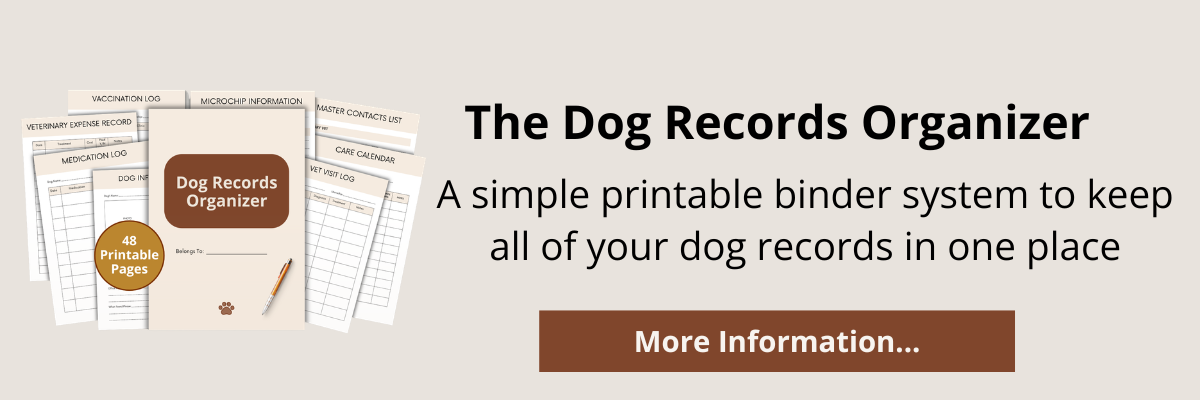
📄 Looking for more lists like this one? The Dog Records Organizer is a ready-to-print system covering all important dog records in one organized place.
Many dog owners keep this sheet in the Dog Care Section of their organizer, so important dog record details are always easy to find.
What Is A Dog Records Organizer?
A dog records organizer helps you keep your dog’s important paperwork and records organized in one easy-to-find place. For a full overview of how the system works, visit our Dog Records Checklist guide.
Below are the details typically included on a complete dog sitter instructions sheet.
Information to Include in Your Dog Sitter Instructions
Your Contact Information
Your sitter needs to be able to reach you quickly and easily throughout your trip. This section should be the first thing on any dog sitter instructions sheet.
- Your full name and cell phone number
- The address or location where you will be staying
- Your travel itinerary with dates and any times you may be unreachable
- A secondary phone number or messaging app you can be reached on
- The name and contact details of a local backup contact in case you cannot be reached
- Written confirmation of when you are leaving and when you are returning
Having your itinerary written down helps your sitter know what to expect and when to expect it.
Emergency Contacts
Your sitter should have a dedicated emergency contacts section that is easy to find without searching through the rest of your instructions.
- Your primary veterinarian’s name, clinic address, and phone number
- The name and address of your nearest 24-hour emergency veterinary clinic
- Your dog’s pet insurance provider and policy number
- A trusted neighbor, friend, or family member who can assist locally
- Your dog’s microchip number and the registry it is registered with
- Your dog’s license number and any relevant local registration details
This section works best when it is written on a single page and placed somewhere visible, such as on the refrigerator or a kitchen counter.
Dog Identification and Records
Your sitter should have a clear record of your dog’s basic information before you leave.
This is especially important if your dog needs veterinary attention while you are away.
- Your dog’s full name, breed, age, and weight
- A current photo of your dog from the front and side
- Microchip number and associated registry contact
- Vaccination records, including rabies certificate and any required documentation
- Known allergies or food sensitivities
- Any current or ongoing health conditions your sitter should be aware of
Keeping a copy of your dog’s vaccination records with the sitter instructions is particularly useful if your dog needs emergency veterinary care.
Feeding Instructions
Feeding details are one of the most important sections on any checklist for dog sitter use, since even small changes to a dog’s routine can cause digestive upset.
- Brand and type of food, including dry, wet, or a combination
- Exact portion size for each meal
- Number of meals per day and the times they are typically given
- Where the food and measuring cup are stored
- Treats that are allowed and in what quantities
- Foods or ingredients your dog should never be given
- Any supplements added to meals and how they are prepared
If your dog eats a special or prescription diet, label the food clearly and include written preparation instructions alongside it.
Daily Routine and Schedule
Your dog’s daily routine gives your sitter a reliable structure to follow throughout each day.
The more detail you include here, the easier it is for your sitter to keep your dog calm and settled.
- Wake-up time and morning routine in order
- Walk times, duration, and preferred routes or locations
- Playtime schedule and favorite toys or activities
- Nap or rest times, if your dog follows a consistent pattern
- Evening walk and feeding times
- Bedtime routine and where your dog sleeps
Dogs tend to settle more quickly when a familiar schedule is maintained, so a written daily timeline is one of the most practical things you can leave for your sitter.
If your dog has a regular walker as part of their daily routine, the Dog Walker Checklist covers the specific information your walker needs to keep that schedule running while you are away.
Dog Behavior and Personality Notes
Your sitter will benefit from knowing how your dog typically behaves so they are not caught off guard by anything unexpected.
- Whether your dog is comfortable with strangers or needs time to warm up
- Known triggers such as loud noises, other dogs, or specific situations
- Leash behavior and any pulling or reactivity on walks
- Whether your dog is allowed off-leash and in what circumstances
- Comfort items your dog relies on, such as a specific blanket or toy
- How your dog typically signals that it needs to go outside
This section helps your sitter respond calmly and consistently in situations that might otherwise feel unfamiliar.
Medication Instructions
If your dog takes any medication, this section needs to be written out clearly and completely.
Your sitter should not have to guess at dosages or timing.
- Name of each medication and what it is for
- Dose and frequency for each medication
- Time of day each medication is given
- How the medication is administered, including any tricks that work for your dog
- Where medications are stored
- What to do if a dose is missed
Label all medication containers with your dog’s name and the correct dosage to avoid any confusion.
House Access and Home Information
If your sitter is staying in your home or making regular visits, they will need practical information about how your home works.
- Entry instructions and key or keypad code details
- Alarm system code and how to arm and disarm it
- Wi-Fi network name and password
- Rooms or areas that are off-limits to your dog
- Location of your dog’s leash, harnesses, poop bags, and grooming supplies
- Location of cleaning supplies in case of accidents
- Any household hazards your sitter should know about, such as a gate that does not latch securely
Leaving a spare key with a trusted neighbor as a backup is worth noting in this section as well.
Supplies and Equipment
Your sitter should be able to find everything your dog needs without having to search. A brief supplies list keeps things running smoothly from the first day.
- Food, treats, and any supplements with enough supply for the full stay plus a few extra days
- Leash, collar, and harness, including which combination your dog uses for walks
- Poop bags and where they are stored
- Grooming supplies your sitter may need to use
- Your dog’s bed, crate, or preferred sleeping area
- Any comfort items your dog uses regularly
Stocking a little extra of everything is always a good idea in case your return is delayed.
Veterinary Authorization
Your sitter needs to know what decisions they are authorized to make if a situation arises while you are away.
This is a practical detail that is easy to overlook.
- Written confirmation that your sitter is authorized to seek veterinary care on your behalf
- Your veterinarian’s name and any existing patient account details
- Whether your sitter is authorized to approve treatment up to a certain cost
- Name and contact details of any additional person who can authorize care if you are unreachable
- Pet insurance details and how to report a claim if needed
Some veterinary offices will request this information before seeing a pet brought in by someone other than the owner, so having it written down removes any delays.
This post covers what to include on a Dog Vet Visit Log Template if you want to keep a log of your dog’s vet visits.
House Rules for Your Dog
Every household has its own rules, and your sitter will follow yours if you write them down clearly.
- Whether your dog is allowed on furniture and which pieces
- Rooms your dog has access to and any that are restricted
- Whether guests or visitors are permitted while you are away
- Whether your dog is allowed to sleep in the bedroom
- Any boundaries your dog is currently being taught that the sitter should maintain
In Summary
A short and specific list of house rules is easier for your sitter to follow consistently than a general description.
Having a complete set of dog sitter instructions written out before you leave takes the uncertainty out of the handover and gives your sitter the confidence to follow your dog’s routine closely.
Organized instructions also mean your sitter spends less time asking questions and more time focused on your dog.
If you would like one structured place for all of your dog’s records, the Dog Records Organizer collects every log, checklist, and record page into a single printable binder you can personalize to your own dog.