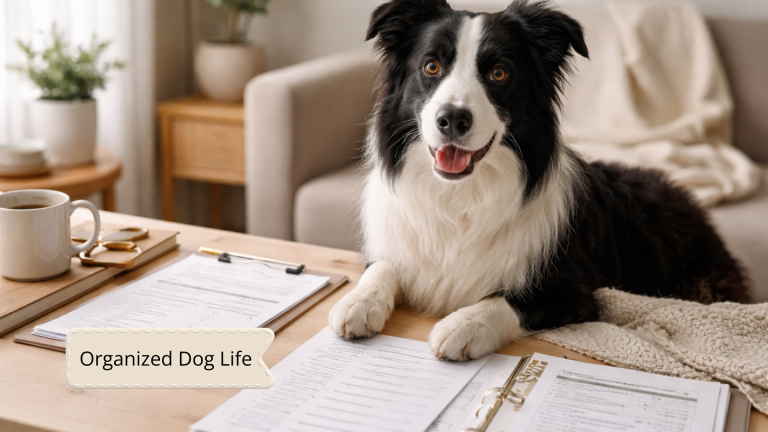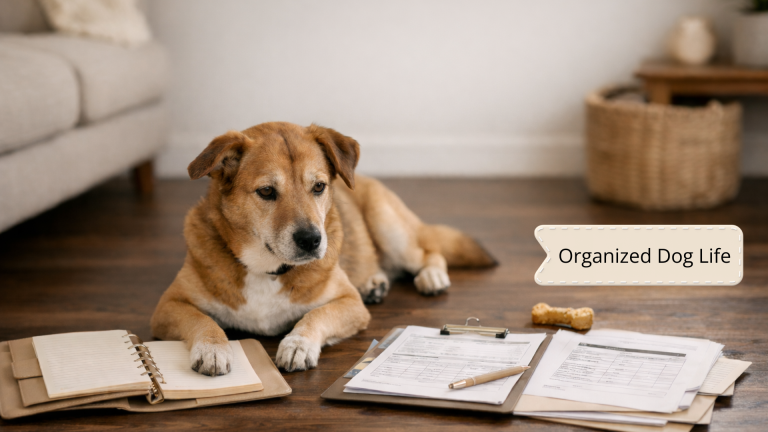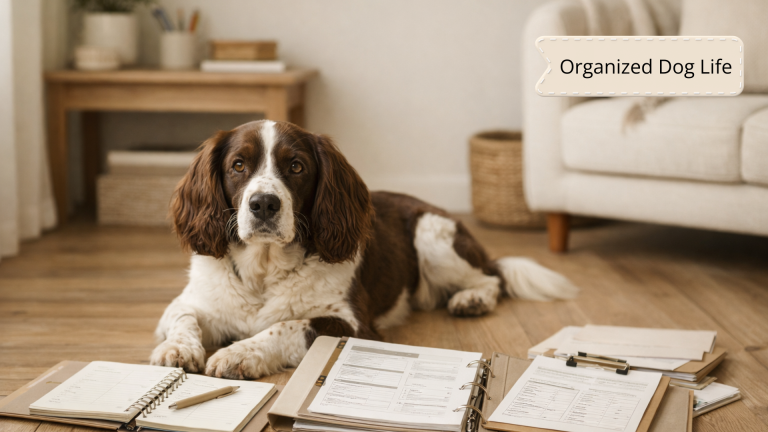

Keeping your dog’s insurance records in order takes very little time to set up, but it makes a significant difference when you actually need to use your policy.
A well-organized insurance records template gives you a single place to log your policy details, track every claim you submit, and store the supporting documents your provider will ask for.
What This List Is For:
This list helps you build a complete dog insurance records template so that every piece of paperwork, every claim, and every policy detail is documented and easy to find.
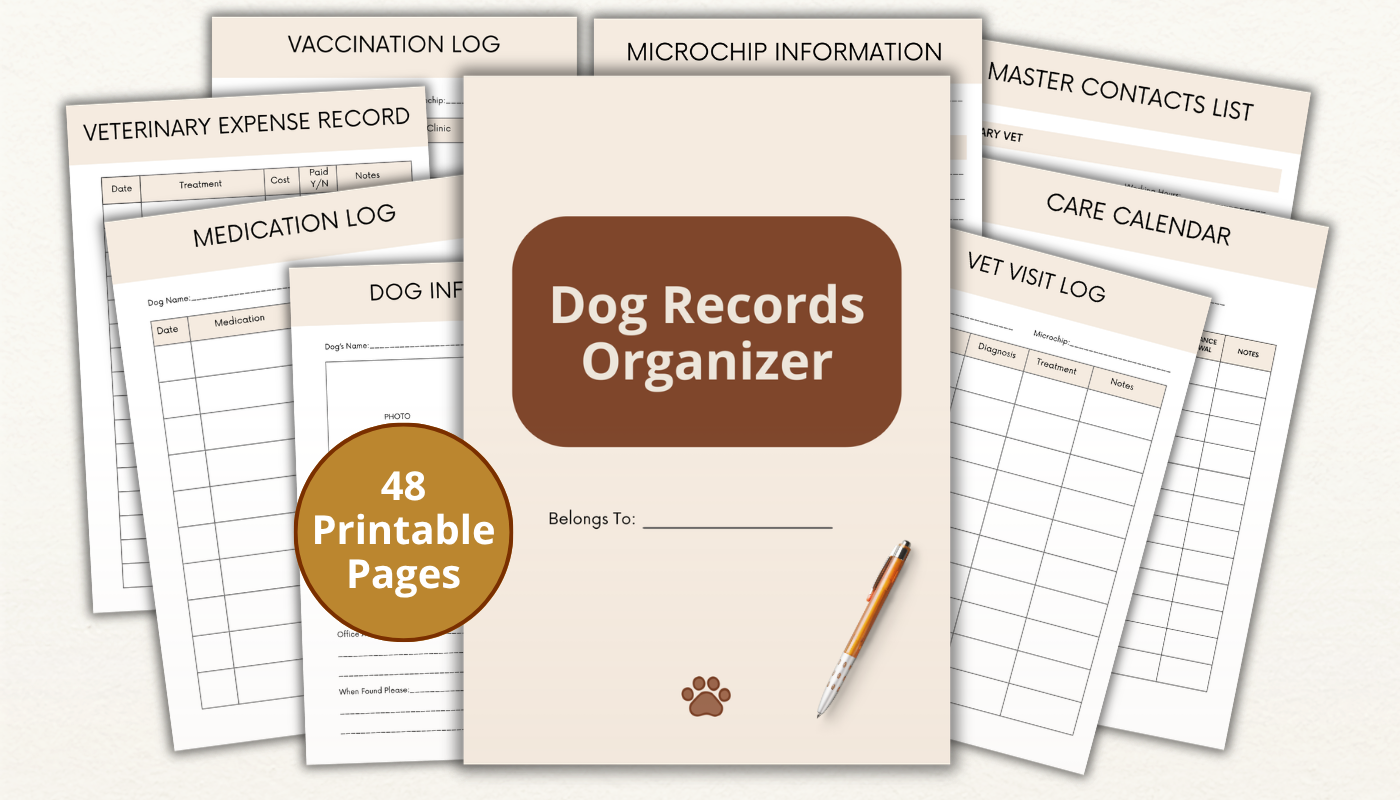
📄 You can find a blank dog insurance records page inside the Dog Records Organizer, which you can personalize to your own needs.
Some dog owners store this sheet in the Expenses & Insurance Section of their organizer to keep essential dog record details easy to reference.
What Is A Dog Records Organizer?
A dog records organizer is a simple way to keep your dog’s important paperwork and information together in one organized place. For a full overview of how the system works, visit our Dog Records Checklist guide.
Below are the details typically included in a dog insurance records template.
Information to Include in a Dog Insurance Records Template
Policy Details
Your policy information is the foundation of your insurance records.
Keeping it documented means you are never searching for your policy number or provider contact in a stressful moment.
- Insurance provider name
- Policy number
- Plan type (accident only, accident and illness, wellness add-on)
- Policy start date and renewal date
- Annual deductible amount
- Reimbursement percentage
- Annual coverage limit
- Premium amount and payment frequency
Having this section complete means your most essential policy facts are available at a glance.
Provider Contact Information
Knowing exactly how to reach your insurance company is just as important as knowing your policy number.
Log this once, and you will always have it ready.
- Insurance company name
- Customer service phone number
- Claims department phone number or email
- Online portal web address
- Mobile app name if applicable
- Mailing address for physical claims
This section saves time during the claims process and removes any uncertainty about where to direct questions.
Dog Identification Information
Insurance providers require basic identification details with every claim.
Having these pre-filled in your records template eliminates repetitive data entry each time you file.
Want a Ready Made Version?
The Dog Records Organizer consists of 27 printable checklists and trackers - over 48 pages - to help keep your dog records neatly organized in one safe place.
Learn More About The Organizer- Dog’s full registered name
- Date of birth or estimated age
- Breed
- Sex and spayed or neutered status
- Microchip number
- Color and distinguishing markings
- Current weight
Your dog’s identification information is also useful for boarding, travel, and emergency documentation, so keeping it centralized in your binder is practical beyond insurance alone.
Veterinary Practice Information
Your insurance provider will contact your veterinarian directly in many cases.
Keeping your vet’s details on file within your insurance records template ensures that the process moves quickly.
- Primary veterinary practice name
- Veterinarian’s name
- Clinic address
- Phone number and fax number
- Email address if available
- After-hours or emergency contact number
- Patient ID or account number with the practice
If you use a specialist or emergency animal hospital regularly, add a second entry for that practice as well.
Dog Insurance Claim Log
A dog insurance claim log is one of the most useful parts of any insurance records template.
Tracking each claim as you submit it gives you a clear record of what was filed, what was approved, and what is still pending.
- Date of veterinary visit
- Reason for the visit or diagnosis
- Total invoice amount
- Date claim was submitted
- Claim reference number
- Amount reimbursed
- Date reimbursement was received
- Any notes on follow-up or appeal
Keeping a running claim log also helps you monitor your annual deductible progress and verify that reimbursements match your policy terms.
Supporting Documents Checklist
Insurance claims require documentation beyond a simple form submission.
Tracking which documents you have gathered for each claim prevents delays and missing paperwork.
- Paid invoice or itemized receipt from the vet
- Medical records from the treating practice
- Completed claim form from the insurance provider
- Photos if required for the claim type
- Referral letter from primary vet if a specialist was involved
- Proof of prior authorization if applicable
- Copy of submitted claim for your own records
Keeping a checklist for each claim ensures nothing is left out before you submit.
Pre-Existing Condition Documentation
Many insurance providers conduct a medical history review when you enroll or submit your first claim.
Keeping a record of any conditions noted as pre-existing protects you from unexpected claim denials.
- Condition name
- Date first diagnosed
- Date noted as pre-existing by the insurer
- Reference to the policy exclusion language
- Date of official confirmation from the provider
- Any correspondence related to the exclusion
This section of your dog insurance records template is a protective reference, not a medical log.
It documents what your insurer has confirmed so that nothing comes as a surprise.
Annual Insurance Summary
Reviewing your insurance records at renewal time helps you assess whether your current plan is still the right fit.
An annual summary section gives you the information you need for that review in one place.
- Policy year dates
- Total premiums paid during the year
- Total claims submitted
- Total amount reimbursed
- Total out-of-pocket expenses
- Any plan changes made at renewal
- Notes on coverage gaps identified during the year
An annual summary also makes it easier to compare plans if you decide to switch providers.
Wellness Plan Records
If your policy includes a wellness add-on, tracking those benefits separately helps you make sure you are using what you are paying for.
Keeping your wellness visits on schedule is easier when you are also working from a dog wellness checklist that covers the routine care your dog needs each year.
Wellness benefits often have annual limits that reset at renewal.
- Wellness plan provider and plan name
- Annual wellness benefit amount
- Services covered under the wellness plan
- Wellness visits completed and dates
- Reimbursements received under the wellness benefit
- Remaining wellness benefit balance
- Benefit reset date
Logging your wellness plan usage throughout the year prevents you from reaching renewal without realizing unused benefits have lapsed.
Password and Account Access Log
Online portals and mobile apps are now central to most insurance claim workflows.
Keeping your login details documented in a secure location within your binder means you are never locked out when you need to file quickly.
- Online portal web address
- Username or email address used to register
- Security question references (not the answers themselves)
- Mobile app name and platform
- Date account was created
- Date of last password update
Store this section in a secure part of your binder, or use a reference note directing you to where your login details are kept.
Notes and Correspondence Log
Insurance conversations can involve multiple phone calls, emails, and online chat sessions.
Keeping a brief log of any significant correspondence protects you if a dispute arises later.
- Date of contact
- Name of representative spoken to
- Method of contact (phone, email, online chat)
- Summary of what was discussed or agreed
- Any reference numbers provided
- Follow-up action required
A brief note after each interaction with your provider takes only a minute to record and can be valuable if a claim is delayed or disputed.
Keeping Your Dog Insurance Records in One Place
A complete dog insurance records template means that every policy detail, every claim, and every supporting document has a defined place in your records system.
That structure is especially useful during stressful situations, such as an unexpected vet visit or a claim that requires follow-up.
Reviewing and updating your template once a year at renewal keeps the information current without requiring ongoing maintenance.
The most important thing is that the records exist and are accessible when you need them.
If you would like a structured place to keep all of your dog’s records, the Dog Records Organizer brings every log, checklist, and record page together in one printable binder.
Ready to set up the full system?
The Dog Records Organizer consists of 27 checklists and trackers - over 50 pages in total - to help you keep your dog records safe and organized in one place.
Learn More About The Dog Records Organizer