
Being a dog owner comes with a surprising amount of stuff to manage.
Between the leashes, the treats, the grooming supplies, and the growing pile of vet paperwork, it is easy for things to end up scattered across your home with no real system holding it all together.
What This List Is For:
This list helps you build a simple, whole-life organization system for your dog that covers everything from the entryway hook to the vet records folder.
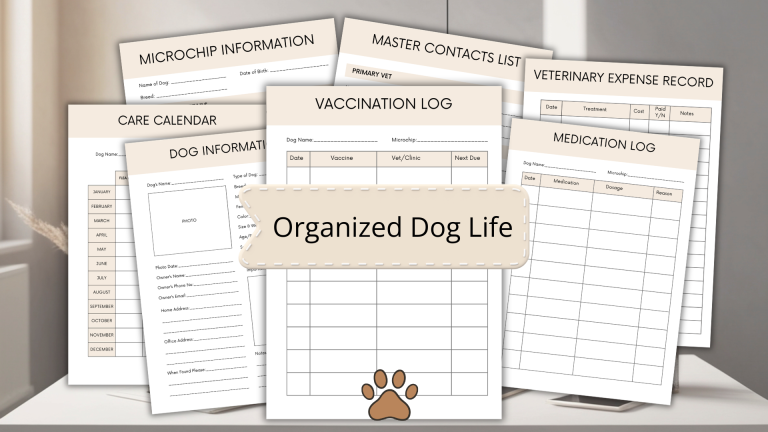
📄 You can find blank, printable Dog Records pages inside the Dog Records Organizer, which you can personalize to your own needs.
The Dog Records Organizer is a structured binder system designed to help dog owners keep all of their dog’s important paperwork in one organized place. Learn more about the Dog Records Organizer guide.
Below are the dog organizer ideas that work best for both supplies and records, divided by area of your dog’s life.
Dog Organizer Ideas for Physical Supplies
Getting your dog’s physical supplies under control is the first step toward a calmer, more functional home.
These ideas focus on the items you reach for daily and the supplies that tend to create the most clutter.
1. Entryway and Walk Station
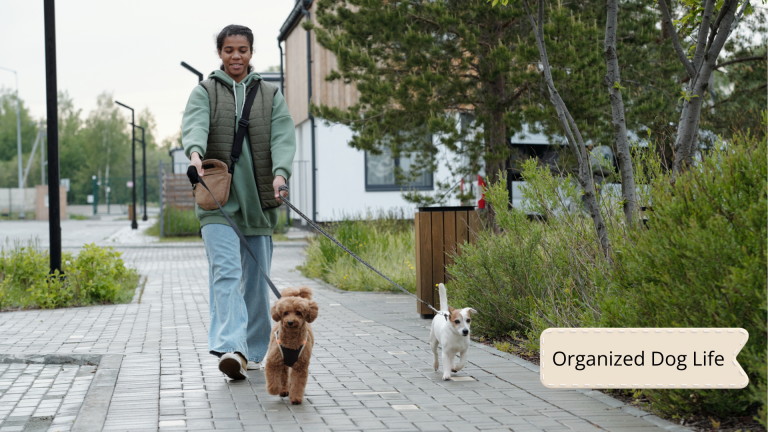
The entryway is where dog chaos tends to start. Creating a dedicated walk station near the door means everything you need for a walk is ready to grab without searching.
A simple hook rail or over-the-door organizer handles the essentials cleanly.
Look for options with multiple hooks at different heights so collars, leashes, and harnesses each have their own spot.
- Primary leash
- Backup leash
- Harness or collar
- Waste bag dispenser
- Portable water bottle and collapsible bowl
- Paw wipes or paw balm
- Key hook for dog walking keys
Keeping this station stocked and reset after every walk takes less than a minute and saves a lot of searching.
2. Dog Toy Storage
Toy clutter is one of the most common complaints among dog owners, and a simple bin system solves most of it.
A low, open basket or canvas bin allows your dog to access toys independently while keeping them visually contained.
Placing it in the living room or a corner of the main space your dog uses most works well for daily access.
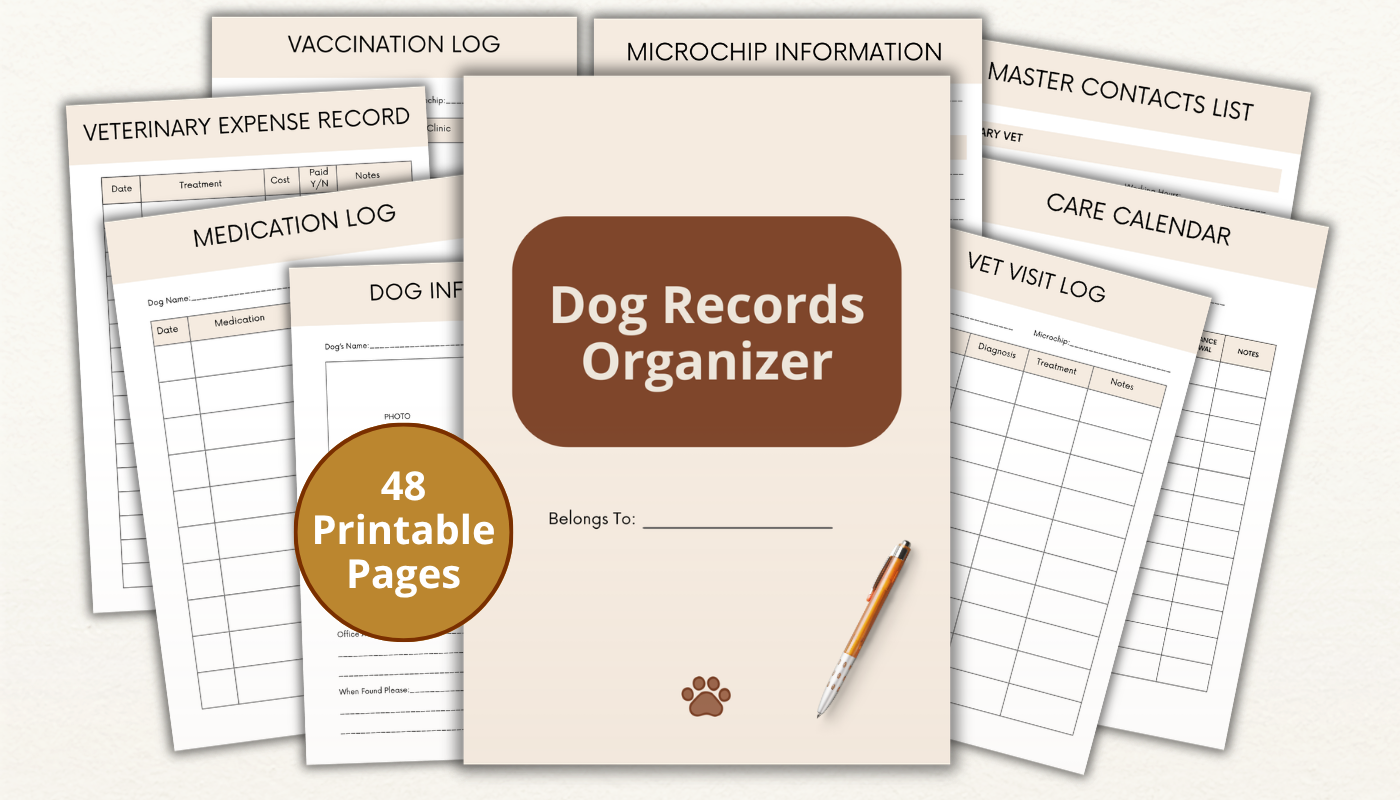
Want a Ready Made Version?
The Dog Records Organizer consists of 27 printable checklists and trackers - over 48 pages - to help keep your dog records neatly organized in one safe place.
Learn More About The Organizer- Rope toys
- Chew toys
- Squeaky toys
- Ball collection
- Tug toys
- Seasonal or rotation toys stored separately
Rotating toys in and out of storage every few weeks keeps your dog interested without adding more clutter to the main bin.
3. Food and Treat Organization
Dog food and treat storage benefits from airtight containers that keep food fresh and visually tidy.
Clear containers with secure lids work particularly well because you can see at a glance when supplies are running low.
Stacking containers in a pantry cabinet or on a dedicated shelf creates a clean feeding station without taking up counter space.
- Dry kibble in an airtight storage container
- Treats in a labeled jar or canister
- Pill pockets or medication treats stored separately
- Feeding scoop
- Placemat for under food and water bowls
- Backup food supply note for restocking timing
A simple label on each container with your dog’s name and feeding portion makes the system easy for pet sitters or family members to follow.
4. Grooming Supply Organization
Grooming supplies tend to spread across bathrooms, laundry rooms, and kitchen drawers.
Consolidating everything into one portable caddy or dedicated drawer keeps grooming sessions efficient.
A handled caddy works especially well because it can move from room to room depending on where you groom your dog.
- Brush and comb
- Dog shampoo and conditioner
- Nail clippers or grinder
- Ear cleaning supplies
- Toothbrush and dog toothpaste
- Towels designated for dog use
- Grooming scissors or thinning shears
Keeping grooming supplies separate from human bathroom supplies also makes it easier to restock and notice when something runs out.
5. Travel and On-the-Go Bag
A dedicated dog travel bag or kit means you are never scrambling to pack when you need to leave quickly.
Whether it is a vet visit, a road trip, or an overnight stay, having a go-bag ready saves significant time.
A tote bag, backpack, or soft-sided carrier bag works well as a dedicated travel kit that lives in a closet or near the entryway.
- Collapsible food and water bowls
- Travel-sized food container
- Leash and backup collar
- Waste bags
- Comfort item or travel blanket
- First aid basics
- Copy of key documents
The document side of your travel kit is covered in the records section below, but keeping physical copies of key paperwork with your travel bag is one of the most practical dog organizer ideas on this list.
Dog Organizer Ideas for Records and Paperwork
The second half of a complete dog organization system is the paperwork.
Vet records, vaccination certificates, insurance documents, and registration papers all need a home that is easy to find and easy to update.
6. Dog Vaccination Record Organization
Vaccination records are among the most frequently requested dog documents.
Boarding facilities, groomers, trainers, and dog parks all commonly ask for proof of current vaccinations, so having these accessible matters.
A dedicated section in a records binder or a labeled folder in a filing cabinet keeps vaccination history easy to locate.
- Vaccine name and type
- Date administered
- Administering veterinarian and clinic name
- Clinic contact number
- Next due date
- Batch or lot number if recorded
- Rabies certificate number
Keeping a digital photo of your dog’s vaccination records on your phone alongside the physical copy gives you a backup that travels with you.
7. Vet Visit Log and Dog Health Records Organization
A vet visit log creates a running record of your dog’s appointments, findings, and follow-up notes over time.
This is particularly useful when switching veterinarians or when a specialist asks for history.
A simple log page per visit works well, filed in date order within your dog records binder.
- Date of visit
- Veterinary clinic name and attending vet
- Reason for visit
- Weight recorded at visit
- Key findings or observations noted
- Medications prescribed
- Follow-up instructions
- Next scheduled appointment
Having this log completed after each visit means you are never trying to reconstruct history from memory when it matters most.
8. Dog Insurance and Financial Records
Pet insurance documents, claim records, and dog-related expense tracking benefit from their own section within your overall dog records system.
Keeping insurance policy details alongside a simple expense log gives you a clear picture of what your dog costs annually and makes insurance claims easier to process.
- Insurance provider name and policy number
- Customer service contact number
- Annual premium and renewal date
- Claim submission process and portal login details
- Claim log with dates and amounts
- Reimbursement amounts received
- Annual expense total by category
Reviewing this section once a year at policy renewal time helps you assess whether your current coverage still fits your dog’s needs.
9. Emergency and Important Contacts Record
An emergency contacts page is one of the most practical dog organizer ideas in any records system. It consolidates every number and detail you might need quickly into a single reference page.
This page works best when it is printed and kept both in your records binder and somewhere visible at home, such as on the refrigerator or inside a kitchen cabinet door.
- Primary veterinarian name, address, and phone number
- Emergency veterinary clinic name, address, and hours
- Pet poison helpline number
- Pet sitter name and contact details
- Dog walker name and contact details
- Trusted neighbor or emergency dog contact
- Microchip registration number and registry contact
Sharing this page with anyone who cares for your dog in your absence means they have everything they need without having to search for it.
10. Registration and Identification Records
Registration documents, microchip details, and licensing records are needed infrequently but are critical when they are required.
Keeping these in a clearly labeled section of your records binder means they are never lost in a drawer.
- Microchip number and registration date
- Microchip registry name and contact details
- Dog license number and renewal date
- Local licensing authority contact
- Breeder registration or kennel club papers if applicable
- Adoption paperwork and shelter contact
- Spay or neuter certificate
Updating this section whenever registration details change, such as at a new address or with a new microchip registry, keeps everything accurate and current.
Summary
Staying organized as a dog owner covers more ground than most people expect, from the entryway hook to the records binder.
These dog organizer ideas are designed to give every part of your dog’s life a clear home, so you spend less time searching and more time enjoying your dog.
The physical and paperwork sides of dog ownership work best when they are treated as one connected system rather than two separate problems.
The Dog Records Organizer is designed to handle the records and documentation side of that system, giving your dog’s important paperwork the same structure you bring to the rest of your home.
Ready to set up the full system?
The Dog Records Organizer consists of 27 checklists and trackers - over 50 pages in total - to help you keep your dog records safe and organized in one place.
Learn More About The Dog Records Organizer