
When you have more than one dog, paperwork and records multiply just as fast as the fur on your couch.
Keeping each dog’s information organized and accessible takes a simple system, and once that system is in place, managing multiple dogs becomes much less stressful.
What This Post Covers:
This post walks you through how to keep track of multiple dogs by building a records and documentation system that separates each dog’s information clearly and keeps everything in one place.
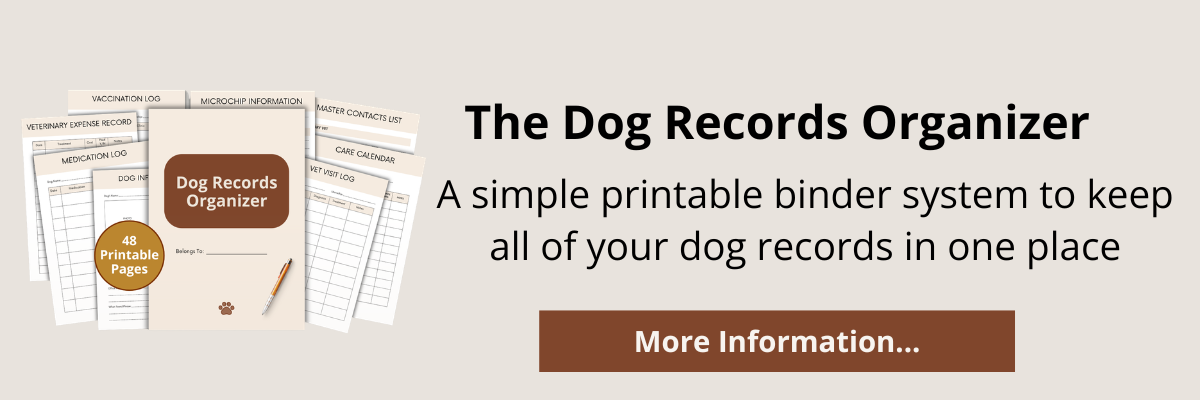
📄 You can find individual record pages for each dog inside the Dog Records Organizer, which you can personalize with each dog’s name, history, and care details.
What Is A Dog Records Organizer?
A dog records organizer is a simple way to keep your dog’s important paperwork and information together in one organized place. For a full overview of how the system works, visit our Dog Records Checklist guide.
Below are the categories of information that belong in a dedicated records section for each dog you own.
Information to Keep for Each Dog When You Have Multiple Dogs
The most important step in any multi-dog records system is separating each dog’s documents into their own dedicated section.
Mixing records across dogs creates confusion during vet visits, boarding situations, and emergencies. Each dog deserves their own complete set of records.
Basic Identification Information
Every dog in your household should have a profile page that captures their core identifying details.
This is the first page anyone would need in an emergency or when handing care off to a sitter.
- Full registered name and call name
- Breed or breed mix
- Date of birth or estimated age
- Sex and spay/neuter status
- Coat color and distinguishing markings
- Current weight and body condition notes
Having this page filled out for each dog means you are never hunting for basic details when you need them quickly.
Microchip and License Records
Microchip numbers and license tags are among the easiest details to lose track of across multiple dogs, especially when registrations come up for renewal at different times.
- Microchip number for each dog
- Microchip registry name and account details
- License tag number and issuing municipality
- License renewal date
- Rabies tag number tied to current vaccination
- County or city registration confirmation details
Keeping these details separate by dog prevents the very common problem of pulling up the wrong microchip number in an emergency.
Vaccination and Preventative Care Records
Each dog’s vaccination schedule will differ depending on their age, history, and lifestyle.
Multi-dog households often have dogs on different preventative care timelines, which makes individual records even more important.
- Vaccine name and date administered
- Administering veterinarian or clinic
- Next due date for each vaccine
- Flea, tick, and heartworm prevention brand and dosage
- Next preventative care due date
- Any noted reactions or sensitivities
This section of your records helps you see at a glance which dog is current and which has an upcoming appointment due.
Vet and Specialist Contact Information
When you have multiple dogs, you may also have multiple veterinarians, specialists, or emergency contacts to manage.
Keeping these details recorded by each dog avoids confusion about which clinic holds which dog’s history.
- Primary vet clinic name, address, and phone number
- Emergency or after-hours vet contact
- Any specialist contact (dermatologist, cardiologist, orthopedic)
- Account or client number at each clinic
- Preferred appointment location if multiple clinic locations exist
- Date of last visit and reason
A contact page per dog is especially useful when a pet sitter or family member needs to reach the right clinic quickly.
Medical History and Ongoing Conditions
For dogs with health histories that affect their care coordination, a summary page helps any caregiver understand what applies to that specific dog without sorting through paperwork.
- Previous surgeries or procedures with dates
- Known allergies to foods or medications
- Current medications with dose and schedule
- Diagnosed conditions relevant to care coordination
- Prior injuries or notable health events
- Vet notes or care instructions on file
This page is not a medical record in the clinical sense. It’s an organizational reference that helps caregivers and family members stay informed about each dog’s history.
Grooming Records
Grooming schedules and preferences vary widely between dogs, particularly in multi-dog households where breeds differ.
A grooming record for each dog keeps appointments and preferences clearly tied to the right dog.
- Groomer name and contact information
- Date of last grooming appointment
- Services completed at each visit
- Next appointment date
- Coat-specific notes, such as length preference or tools used
- At-home grooming products used for each dog
Having this information recorded by each dog means you are not relying on memory when booking the next appointment or welcoming a new groomer.
Boarding and Pet Sitter Information
Sending multiple dogs to a boarder or leaving them with a pet sitter involves a significant amount of coordination.
A boarding information sheet for each dog helps caregivers manage them individually, even when they are together.
- Feeding schedule and portion size specific to each dog
- Any food restrictions or dietary needs
- Behavioral notes relevant to care, such as separation anxiety around feeding
- Daily routine preferences
- Emergency contact and vet authorization
- Any medications the sitter will need to administer
Some owners also keep a short one-page summary per dog specifically for pet sitters, pulled from the main records binder.
Insurance Records
If your dogs are insured, keeping policy details organized by dog prevents billing errors and claim delays.
Multi-dog households with different coverage levels especially benefit from this type of record.
- Insurance provider name and policy number
- Monthly premium and renewal date
- Coverage summary (accident, illness, wellness)
- Claims process contact or portal information
- Previous claim dates and outcomes
- Payment method on file
Insurance records become most useful in urgent situations, so having them easily accessible by dog is worth the extra setup.
Annual Registration and Renewal Tracker
Multi-dog households often deal with staggered registration renewals, vaccine due dates, and license expirations.
A simple tracker that lists all upcoming dates by dog prevents anything from slipping through.
- License renewal date per dog
- Rabies certificate expiration per dog
- Next annual wellness visit due date
- Flea and tick prevention reorder date
- Heartworm test due date
- Any other annual or recurring task tied to that dog
This is one of the most practical tools in a multi-dog records system because it gives you one central view of what is coming up for your whole household.
Emergency Information Sheet
In an evacuation or emergency, having a ready-to-grab sheet for each dog saves critical time.
This page should be easy to find and quick to hand off.
- Dog’s name, description, and photo reference
- Microchip number
- Primary vet contact
- Emergency vet contact
- Any urgent medical information a first responder would need
- Owner contact details
Many multi-dog owners keep a laminated copy of each dog’s emergency sheet in their go-bag alongside vaccination certificates.
Staying Organized with Multiple Dogs
When you keep track of multiple dogs using a consistent records system, you stop relying on memory and start relying on documentation. Each dog has their own complete profile, and nothing gets mixed up between them.
If keeping all of your dog’s records in one place sounds useful, the Dog Records Organizer gives you a complete printable system covering every area of dog ownership.