
Dog supplies have a way of spreading through a home quickly.
Leashes end up in coat pockets, treats migrate to three different drawers, and grooming tools disappear between appointments.
A simple dog supply organization system puts everything in a defined place, so daily care runs smoothly and nothing gets lost between uses.
What This List Is For:
This list helps you identify what you own, where it belongs, and what to restock before it runs out.
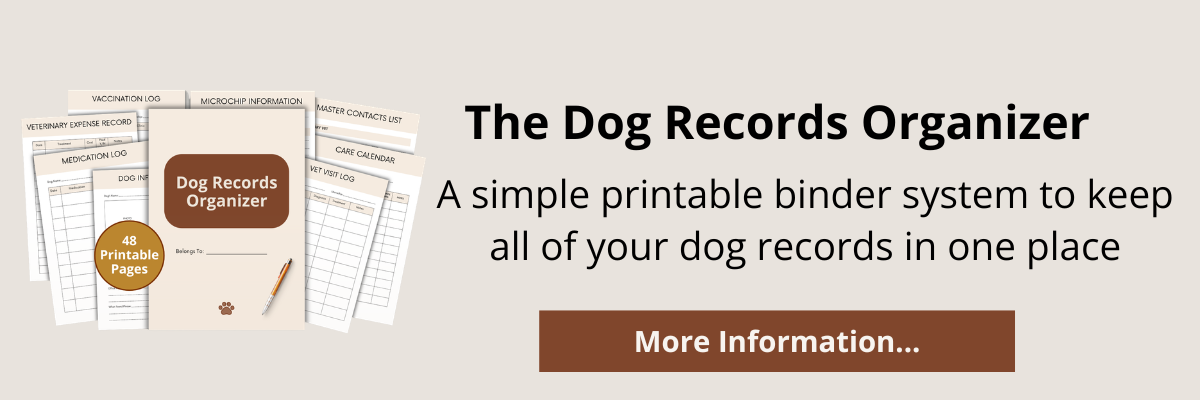
📄 You can find a blank Dog Supply Checklist inside the Dog Records Organizer, which you can personalize to reflect your own supply categories and storage setup.
What Is A Dog Records Organizer?
A dog records organizer is a simple way to keep your dog’s important paperwork and information together in one organized place. For a full overview of how the system works, visit our Dog Records Checklist guide.
Below are the supply categories most dog owners need to organize, along with what to include in each one.
Dog Supplies Organization: Categories to Set Up at Home
Food and Feeding Supplies
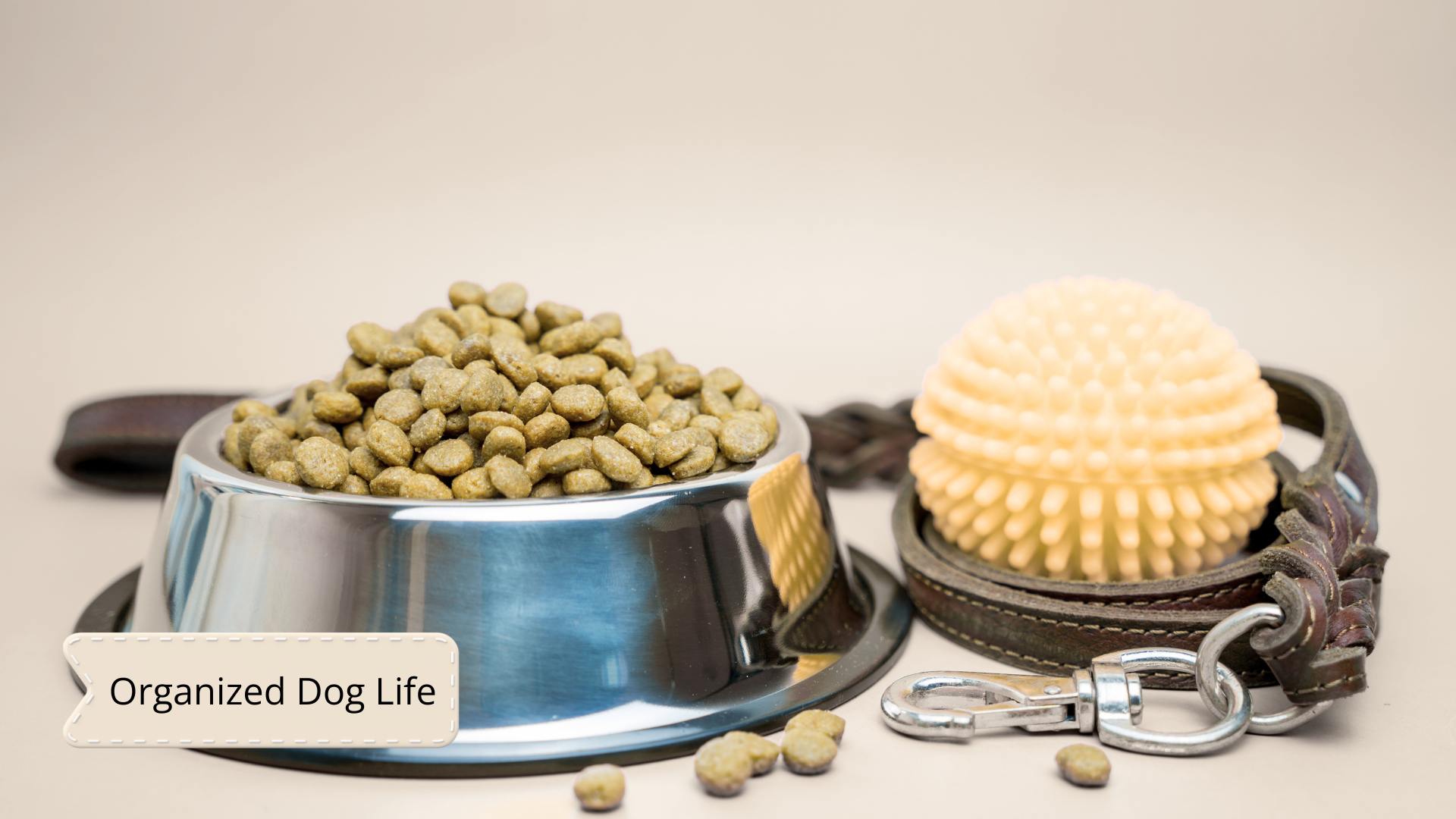
The feeding station is one of the highest-traffic areas of any dog supply setup, so keeping it tidy and stocked saves daily friction.
Group everything related to mealtime in one location, whether that is a pantry shelf, cabinet, or kitchen corner.
- Brand and variety of dry food currently in use
- Brand and variety of wet or fresh food if applicable
- Container type and size for dry food storage
- Scoop size and location
- Bowl set: food bowl and water bowl
- Slow feeder or puzzle bowl if used
- Elevated stand if applicable
- Current bag or can quantity on hand
Noting your container size on your supply checklist makes reorder decisions faster and prevents you from buying the wrong format.
Treats and Chews
Treats tend to accumulate from multiple sources: training sessions, vet visits, and impulse purchases.
Grouping them together prevents duplication and helps you track what is open and what is being stored for later.
- Primary training treat brand and size
- Dental chews: type, size, and frequency of use
- Long-lasting chews or bully sticks if kept on hand
- Soft treats for medications or pill administration
- Open container or bag with closure clip
- Storage jar or airtight container in use
- Reorder threshold noted
Keeping a running list of what treat types your dog responds to is a useful reference for pet sitters and boarding facilities.
Leashes, Collars, and Walk Gear
Walk gear is easiest to manage when it lives near the door and never travels far from its designated spot.
A hook, basket, or small bin by the entry point is enough to keep this category under control.
- Primary collar with current ID tags attached
- Backup collar if kept
- Everyday leash
- Long line or training leash if applicable
- Retractable leash if used
- Harness type and size
- Rain gear or boots for inclement weather
- Poop bag holder with bags loaded
Noting the collar and harness size on your supply list means you can reorder accessories without measuring your dog each time.
Grooming Supplies
Grooming supplies are one of the most commonly scattered categories because they get used in different rooms and rarely return to the same place.
A dedicated caddy, basket, or drawer keeps the full set together.
- Brush type suited to your dog’s coat
- Comb or deshedding tool if applicable
- Nail clippers or grinder
- Styptic powder for nail trimming
- Dog shampoo currently in use
- Conditioner or detangling spray if applicable
- Ear cleaning solution and cotton balls
- Dog-safe toothbrush and toothpaste
Recording your grooming product brands makes it straightforward to reorder the same items and pass instructions to a groomer.
Medications and Health Supplies
This category requires accurate tracking more than any other. Even if your dog is healthy, keeping a clear record of what is on hand and when it was last used supports good documentation habits.
This is a medication supply list only; any medical decisions remain between you and your veterinarian.
- Flea and tick prevention: product name, dose, and last application date
- Heartworm prevention: product name and current supply quantity
- Any ongoing prescribed medications with refill dates
- Storage location for all medications
- First aid kit location
- Contents checklist for the first aid kit
- Expiration dates noted for anything with a shelf life
A dedicated section in the Dog Records Organizer is designed to hold medication logs and prescription records alongside your supply notes.
Toys and Enrichment
Toy storage works best when it is edited regularly. Dogs often have a smaller active rotation than the total toy count would suggest, and rotating toys keeps them engaged longer.
A defined toy bin also makes it easier to spot what needs replacing.
- Current active toy bin location
- Toy types in rotation: chew toys, tug toys, squeaky toys, fetch toys
- Puzzle or enrichment feeders if used
- Rotation schedule if followed
- Stored or seasonal toys and their location
- Toys to replace noted
Labeling a second bin for stored or seasonal toys prevents the overflow from mixing with the active rotation.
Bedding and Comfort Items
Bedding is often overlooked in supply organization because it is stationary, but tracking sizes, washing schedules, and replacement timelines keeps the category manageable over time.
- Primary bed: type, size, and washing frequency
- Crate pad or liner if applicable
- Blanket or comfort item used during travel or crating
- Spare bedding stored and its location
- Cover or slip for the main bed if washable
- Last replacement date or approximate age of current bed
Noting the bed size and brand on your supply checklist simplifies replacement shopping when wear becomes visible.
Travel and Car Supplies
Travel supplies have a habit of living permanently in the car or getting mixed into general household storage.
A dedicated travel bag or bin creates a clean handoff point between home and vehicle.
- Travel water bottle and collapsible bowl
- Car seat cover or cargo liner
- Travel crate or seat restraint
- Portable food container for overnight trips
- Waste bags dedicated to the travel kit
- Copy of vaccination records kept in the travel bag
- Any travel-specific medications noted
Keeping a laminated copy of your dog’s basic records in the travel kit means you are prepared whether the trip is planned or urgent.
Emergency and Backup Supplies
An emergency supply section does not need to be large, but it should be stocked, labeled, and easy to locate.
This category overlaps with the first aid kit but extends to the administrative side of emergency preparedness.
- First aid kit: location and last contents check
- Emergency vet contact and address noted
- Backup food supply quantity
- Spare collar and leash kept separately
- Emergency contact sheet for your dog
- Copy of microchip number, licensing, and insurance information
- Pet carrier or crate accessible in an emergency
The Dog Records Organizer includes an emergency contact sheet that can be filled out and kept with this section of your supply setup.
Pet Sitter and Boarding Information
When a pet sitter or boarding facility needs access to information about your dog, having a supply reference makes the handoff easier.
This is less about physical supplies and more about the documentation that travels with them.
- Current food brand, amount, and feeding times written out
- Treat list with any restrictions noted
- Medication schedule if applicable
- Grooming schedule and products preferred
- Emergency contact information
- Veterinarian contact information
- Behavioral notes relevant to care
A pet sitter information sheet kept alongside your supply checklist means anyone stepping in to care for your dog has everything they need in one place.
You can find a related post on building a pet sitter information sheet for dogs in the Dog Records silo.
Supply Reorder Tracking
The last section of a dog supply organization checklist is often the most practical: a simple supplies reorder list that prevents you from running out of essentials at an inconvenient time.
- Low-stock threshold for each consumable item noted
- Current quantities for food, treats, and medications
- Subscription or auto-ship dates if applicable
- Items to pick up at the next vet visit
- Seasonal items to restock before winter or summer
Reviewing this list once a month takes less than five minutes and prevents the scramble of realizing something has run out.
Putting Your Dog Supply System Together
A dog supply organization system does not need to be elaborate to work. The goal is a defined location for every category, a checklist that reflects what you actually own, and a habit of reviewing it regularly.
Once supplies are categorized, the rest of the administrative side of dog ownership becomes easier to manage alongside them.
The Dog Records Organizer includes a blank printable Dog Supply Checklist page you can use as a starting point and fill in to match your own setup, storage locations, and reorder notes.