
A dog hub is a single, designated area in your home where all of your dog’s supplies, records, and daily essentials are stored together.
Setting one up takes less effort than most people expect, and the payoff is a home that runs more smoothly from the first week.
What This Post Covers:
This post walks you through how to set up a dog hub at home, including what to store there, how to organize each category, and how to keep it functional over time.
📄 You can find blank dog-related checklists inside the Dog Records Organizer, which you can personalize to suit your space and your dog’s needs.
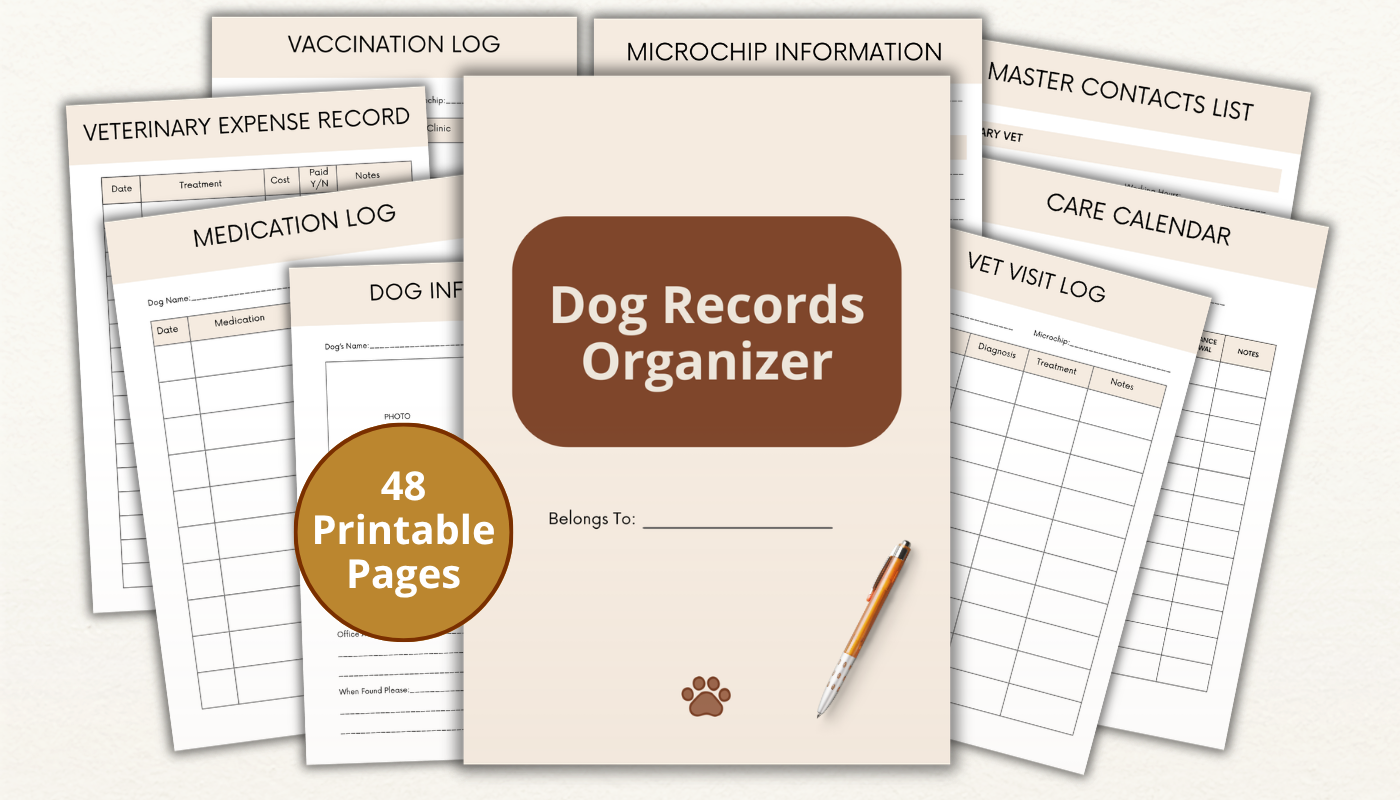
The Dog Records Organizer is a structured binder system designed to help dog owners keep every document, record, and care detail in one organized place. You can learn more on the Dog Records Organizer hub page.
Below are the key components typically included in a well-organized dog hub at home.
What to Include When You Set Up a Dog Hub at Home
A Dedicated Storage Location
The first step in setting up a dog hub at home is choosing where it will live. The location does not need to be large; it needs to be consistent and accessible during your daily routine.
- Mudroom shelf or cabinet
- Laundry room corner or utility shelf
- Hallway closet section
- Kitchen cabinet designated for dog supplies
- Entryway basket or bin system
- Built-in shelf near the back door
- Under-bench storage near the dog’s resting area
Once the location is established, everything else in the hub has a home to return to.
Food and Treat Storage
Food and treats are the most frequently used supplies in any dog hub, so they benefit from clear, consistent storage that is easy to access and easy to restock.
- An airtight container sized to hold at least one full bag of food
- Separate smaller container for training treats or daily treats
- Measuring scoop stored with the food container
- Label noting the current food brand and portion size
- Note of the reorder schedule or current stock level
- Space for supplement pouches or food toppers if used
- Location that stays dry and away from direct sunlight
Keeping food storage contained within the hub prevents it from spreading across multiple areas of the kitchen or garage.
Leashes, Collars, and Walk Gear
Walk gear is one of the most commonly misplaced categories in a dog household.
Assigning it a fixed spot in the hub eliminates the daily search before walks.
- Primary leash on a hook or in a designated basket
- Backup leash stored alongside it
- Current collar with tags attached and confirmed readable
- Harness if used regularly
- Retractable leash if used for specific outings
- Poop bag dispenser or bag supply
- Weather gear such as a rain jacket or booties if applicable
Hanging hooks work well for leashes and collars because they keep items visible and easy to grab quickly.
Grooming Supplies
Basic grooming supplies belong in the hub rather than scattered across bathrooms or utility closets.
Keeping them together makes routine grooming more likely to happen consistently.
Want a Ready Made Version?
The Dog Records Organizer consists of 27 printable checklists and trackers - over 48 pages - to help keep your dog records neatly organized in one safe place.
Learn More About The Organizer- Brush appropriate for your dog’s coat type
- De-shedding tool if needed
- Dog-safe nail clippers or nail file
- Dog-formulated ear cleaning solution and cotton pads
- Towels designated for dog use
- Dog toothbrush and toothpaste if used at home
- Grooming wipes for quick cleanups between baths
A small basket or bin works well for containing grooming tools within the hub.
Medications and Preventative Care Items
Any medications or preventative treatments your dog receives should be stored together in the hub where they are easy to locate and verify.
- Current flea, tick, or heartworm prevention product
- Any prescribed medications in labeled containers
- Dosing schedule or administration notes if applicable
- Extra supply of any recurring preventative treatment
- Veterinary contact card or magnet stored nearby
- Note of the last administration date and next due date
- Storage that stays within the correct temperature range for each product
Keeping a simple record of administration dates within the hub prevents missed doses and removes guesswork at reorder time.
Dog Records and Documentation
Your dog hub at home is also the natural location for your dog’s paper records, which need to be accessible quickly in situations such as boarding, travel, or a veterinary visit.
- Vaccination records organized by year and type
- Microchip registration confirmation
- Insurance policy documents and claim forms
- Rabies certificate
- Breeder or adoption paperwork
- Emergency contact list for your veterinarian and a backup contact
- Current license or registration if required in your area
Storing these documents in a labeled binder or folder within the hub means they are never buried in a kitchen drawer when you need them.
Toys and Play Supplies
Toy storage benefits from a container that makes it easy to rotate what is available and easy to tidy up at the end of the day.
- One open bin or basket sized to hold a reasonable toy rotation
- No more toys in rotation than fit comfortably in the container
- Backup or seasonal toys stored separately in a labeled bin
- Any interactive puzzle toys stored separately to prevent damage
- Replacement supplies such as extra tennis balls or rope toys
- Designated drop zone so toys return to the bin consistently
Keeping toys contained within the hub rather than spread across the home simplifies daily tidying.
Spare Supplies and Restock Items
A small section of the hub dedicated to backup supplies prevents the situation where you run out of something at an inconvenient time.
- Spare poop bags
- Extra collar or leash as a backup
- Replacement ID tag or blank tag and engraving tool
- Unopened grooming supplies waiting to replace current stock
- Backup flea and tick prevention if purchased in advance
- Spare food bowl if travel or backup use is needed
- Any seasonal items such as paw balm or cooling mats stored when not in active use
Checking this section during your monthly or seasonal dog admin review keeps restock needs visible before they become urgent.
A Spot for Your Dog Records Organizer
The Dog Records Organizer belongs in or directly next to the hub so it is always within reach when you need to log a vet visit, confirm a vaccination date, or pull documentation for a boarding stay.
- Upright in a magazine holder or document stand
- Flat in a designated shelf section
- Inside a cabinet within the hub space
- In a labeled section alongside other dog paperwork
- Accessible without moving other items to reach it
- Stored consistently so every household member knows where to find it
- Returned to the same spot after each use
The habit of returning the binder to its place in the hub is what keeps the whole system working over time.
Labels and a Maintenance Routine
A dog hub at home stays functional when each area is clearly labeled and reviewed on a regular schedule.
- Labels on all bins, baskets, and containers
- A simple restock checklist posted or stored inside the hub
- Monthly or seasonal check to clear expired items
- Annual review to assess whether the hub size and setup still fits your needs
- Consistent location for incoming paperwork before it is filed in the binder
- A household rule that supplies return to the hub after use
- A note of any upcoming renewals such as license tags, insurance, or preventative treatments
A hub that is reviewed regularly requires very little effort to maintain between sessions.
Setting Up Your Dog Hub
A dog hub at home does not need to be elaborate to work well. A single shelf, a few clearly labeled containers, and a consistent habit of returning things to the same place is enough to make a real difference in how smoothly your dog care routine runs day to day.
Ready to set up the full system?
The Dog Records Organizer consists of 27 checklists and trackers - over 50 pages in total - to help you keep your dog records safe and organized in one place.
Learn More About The Dog Records Organizer