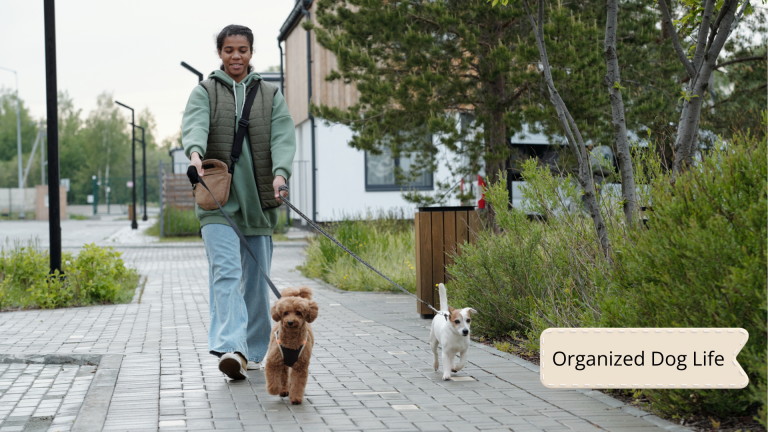

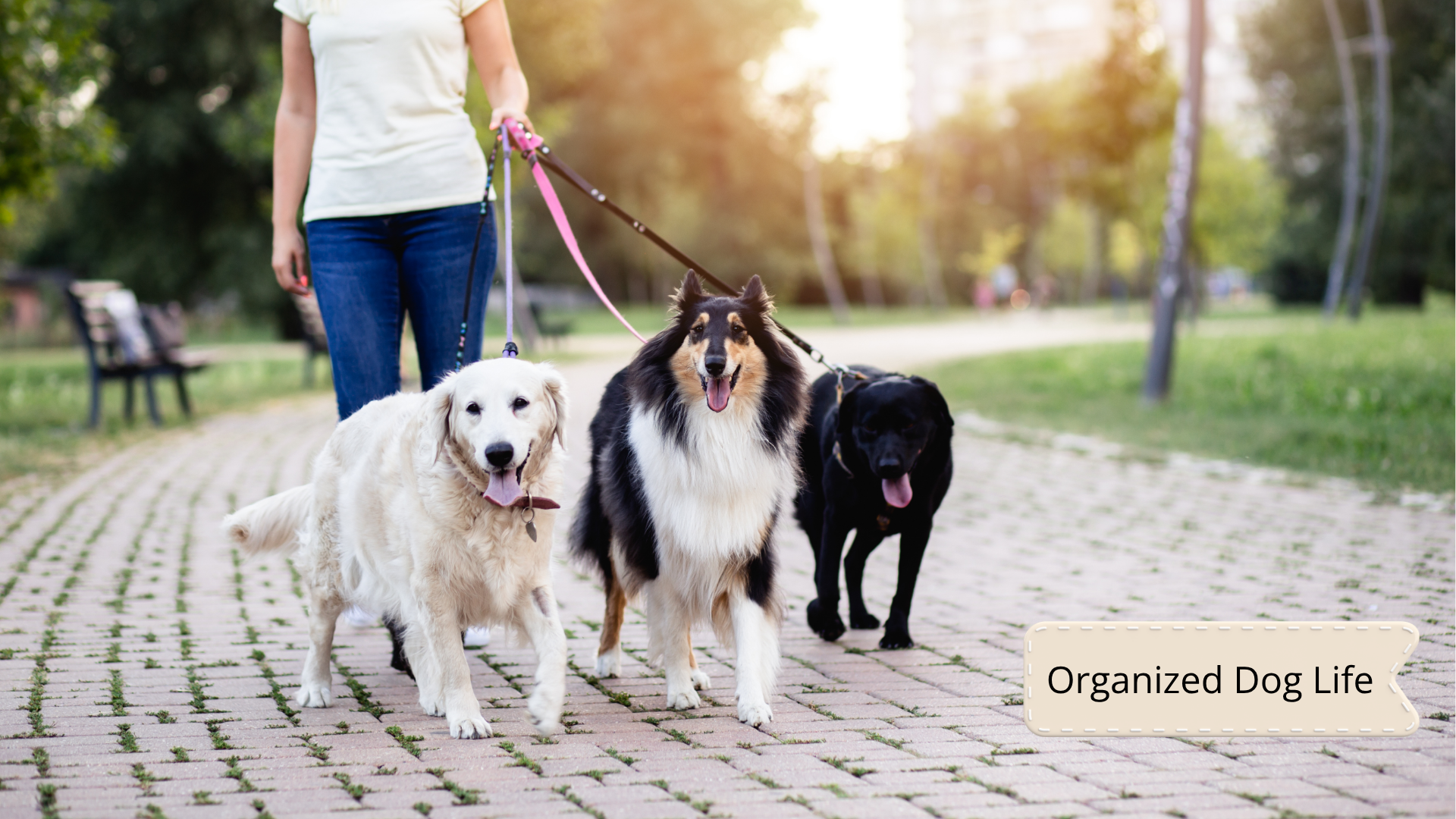
A dog walker visits your home regularly, often without you there, and takes your dog into public spaces on your behalf.
That ongoing arrangement requires a different kind of documentation than a one-time boarding drop-off or a pet sitter stay.
What This List Is For:
This list helps you gather and organize the information, records, and instructions your dog walker needs before the arrangement begins and throughout every walk that follows.
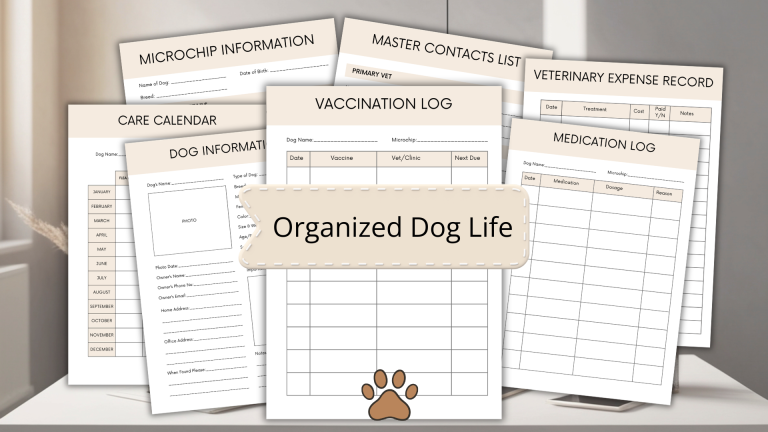
📄 Looking for more lists like this one? The Dog Records Organizer is a ready-to-print system covering all important dog records in one organized place.
Some dog owners store this sheet in the Travel & Boarding Section of their organizer to keep essential dog record details easy to reference.
What Is A Dog Records Organizer?
A dog records organizer keeps your dog’s key paperwork and information organized together so it’s easy to find when you need it. For a full overview of how the system works, visit our Dog Records Checklist guide.
Below are the details typically included on a complete dog walker checklist.
Information to Include in a Dog Walker Checklist
Owner and Emergency Contact Details
Because your walker visits on a routine schedule, your contact information should be confirmed at the start of the arrangement and reviewed any time your details change.
- Your full name, cell phone number, and a secondary number if available
- Your typical location or schedule during walk times so your walker knows when you are reachable
- An emergency contact name and phone number for situations where you cannot be reached
- Your veterinary clinic name, address, and phone number
- Written confirmation of whether your walker is authorized to approve emergency veterinary care on your behalf
This section is brief by design: the goal is quick access to the right person in the right situation, not a full contact directory.
Dog Identification and Access Information
Your walker needs to be able to identify your dog and enter your home independently.
Keeping this documented means the arrangement runs smoothly from the first visit.
- Your dog’s name, breed, age, weight, and any distinguishing markings
- Microchip number and license number for reference
- A current photo kept with the information sheet
- Entry instructions, including key location or lockbox code
- Alarm system code and disarm steps
- Any gate codes, door quirks, or access notes specific to your property
Review this section any time you change locks, codes, or security arrangements.
Walk Route and Schedule Preferences
This is one of the sections that distinguishes a dog walker checklist from a general pet care sheet.
Your walker needs to know your preferences before the first walk, not after the first problem.
- Preferred walk duration and frequency
- Preferred routes, neighborhoods, or parks your dog is familiar with
- Streets, areas, or locations to avoid
- Whether your dog is permitted off-leash and in which specific locations only
- Any timing preferences, such as avoiding peak traffic hours or midday heat
- Whether the schedule varies by season or day of the week
A specific route and schedule section prevents assumptions and sets expectations clearly for both sides of the arrangement.
Leash, Equipment, and Handling Notes
Your walker needs to know exactly what equipment your dog uses on walks and where to find it.
If you change your dog’s leash setup or collar, a brief update to this section prevents confusion on the next visit.
- Leash type, length, and storage location in the home
- Collar or harness your dog wears for walks, and which ID tags are currently attached
- Any backup leash or equipment kept in the home
- Commands your dog responds to reliably during walks
- Any specific handling preferences related to your dog’s size, strength, or movement patterns
- Whether your dog requires a particular approach when encountering other dogs or people on a leash
Keeping this section current is especially important if your dog is working with a trainer on leash behavior, since your walker can be consistent without needing additional instruction.
Dog Behavioral Notes for Walks
This section documents consistent patterns your walker should know before encountering them in public.
It’s a record of known behaviors, not a training plan.
- Other dogs, animals, or situations that reliably cause your dog to pull, bark, or become reactive
- Loud sounds, vehicles, or environmental triggers your dog responds to strongly
- Whether your dog has ever slipped out of a collar or harness on a walk
- How your dog behaves with strangers who approach on a trail or sidewalk
- Any history of chasing, bolting, or pulling toward traffic
- Known locations along your preferred routes where your dog typically reacts
Update this section any time your dog’s behavior in a specific situation changes, so your walker is never caught off guard by something you already know about.
Health and Medication Reminders for Walk Days
This section does not require a full medical history.
It covers only what affects how your dog moves, exercises, and tolerates physical activity on a regular walk.
- Any current medication that affects your dog’s stamina or exercise tolerance
- Mobility limitations that affect walk pace, duration, or terrain
- Known seasonal sensitivities, such as grass allergies or sensitivity to heat or cold
- Whether your dog wears flea or tick prevention, and the product currently in use
- Date of last flea, tick, and heartworm preventative for reference
- Vet contact details for any walk-day questions
A brief note here prevents your walker from pushing a pace or distance that is not appropriate for your dog on a given day.
If you track your dog’s flea, tick, and heartworm preventatives on a monthly schedule, the Dog Monthly Preventative Care Checklist gives you a consistent format for recording each task as it is completed.
Dog Walking Log
A dog walking log is the record that makes a walking arrangement genuinely useful over time.
Unlike a one-time instruction sheet, a walking log captures what actually happened on each visit.
- Date and time of each walk
- Walk duration and approximate route or area covered
- Whether your dog eliminated during the walk
- Any observations from the walker about your dog’s energy, behavior, or physical condition
- Notes on anything unusual encountered: off-leash dogs, traffic incidents, weather issues
- Whether your dog ate, drank, or showed any change in appetite before or after the walk
A consistent dog walking log also gives you a practical record to reference if patterns emerge over weeks or months, without relying on memory or informal messages.
Walker Service and Contact Record
Keeping a simple record of your walking arrangement in one place means you always have the details on hand without searching through messages or emails.
- Your walker’s full name and contact information
- Service rate, billing cycle, and payment method
- Walk schedule as agreed at the start of the arrangement
- Cancellation policy and how last-minute changes are handled
- Date the arrangement began
- Any signed service agreement or contract stored with the binder
This is a documentation record, not a legal document. Its purpose is easy reference, especially when billing questions or schedule changes come up months into an arrangement.
Key Handover and Access Record
If your walker holds a key or access code, keeping a record of what was shared and when is a straightforward habit worth building into your dog walker checklist from the start.
- Date the key or access code was given to the walker
- Whether a copy of the key was made and by whom
- Instructions for key return if the arrangement ends
- Whether any additional household members or backup walkers have been given access
- Lock or alarm changes made after the arrangement began and whether the walker was updated
This section takes two minutes to complete and removes any ambiguity if your access arrangements need to be revisited.
Backup Plan and Substitute Walker Notes
Even well-established walking arrangements occasionally need a substitute.
Documenting your backup plan in advance means a last-minute change does not leave your dog without a walk.
- Name and contact details of any approved substitute walker
- Whether the substitute has a key or needs one provided
- Any additional notes a substitute would need that differ from your regular walker’s instructions
- Your preferred notification process if your regular walker cannot make a scheduled visit
- Whether your dog has met the substitute and how that introduction went
If a substitute is used more than occasionally, they should have their own completed information sheet rather than relying on secondhand notes.
If your backup arrangement involves a sitter rather than a substitute walker, the Dog Sitter Instructions Checklist covers the fuller set of information a sitter needs for an overnight or multi-day stay.
Keeping Your Dog Walker Records Organized
A complete dog walker checklist covers considerably more than most owners put in writing when a walking arrangement begins.
Starting with a documented information sheet, a clear route and schedule section, and a walking log in place means your walker has what they need from the first visit.
Reviewing the sheet once a season takes only a few minutes and keeps the arrangement current without back-and-forth.
If your dog’s behavior changes, your contact details update, or your schedule shifts, a single sheet is faster to revise than scattered notes across messages and conversations.
If keeping all of your dog’s records in one place sounds useful, the Dog Records Organizer gives you a complete printable system covering every area of dog ownership.