

Dog ownership comes with a long list of costs that are easy to underestimate when they are spread across an entire year.
A dog expense tracker gives those costs a place to live, so you always have a clear picture of what you are spending and where.
What This List Is For:
This list helps you record and organize every category of dog-related spending throughout the year.
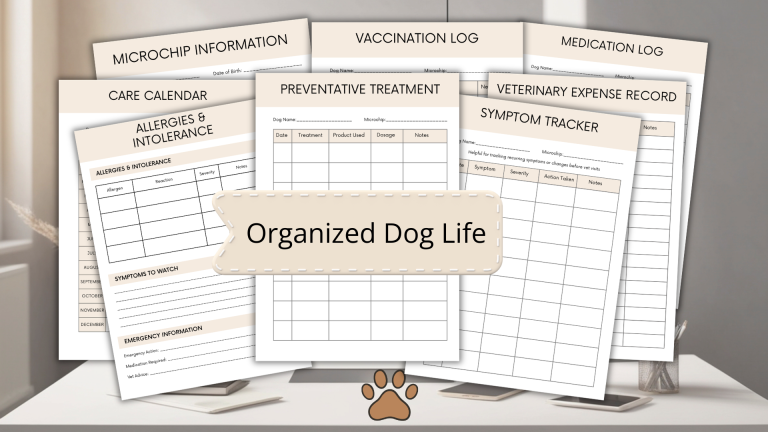
📄 You can find a blank Dog Expense Tracker printable inside the Dog Records Organizer, which you can personalize to your own needs.
Some owners place this sheet inside the Financial Section of their organizer so essential dog record details stay organized and simple to reference.
What Is A Dog Records Organizer?
A dog records organizer is a simple way to keep your dog’s important paperwork and information together in one organized place. For a full overview of how the system works, visit our Dog Records Checklist guide.
Below are the details typically included on a complete dog expense tracker.
Information to Include on a Dog Expense Tracker
Basic Identification and Log Setup
Before you record a single expense, it helps to establish the basic structure of your tracker.
This section anchors each log entry and makes it easier to review records over time.
- Dog’s name
- Tracking period (month, quarter, or full year)
- Your name or household identifier for multi-dog homes
- Tracker start date
- Expense log number or page reference
- Notes field for context
Keeping this section consistent across every log period makes it easy to compare records from one year to the next.
Routine Food and Treat Expenses
Food is typically one of the largest recurring costs in any dog ownership cost log. Tracking it regularly helps you see how costs shift with changes in brand, portion size, or dietary needs.
- Date of purchase
- Brand and product name
- Bag or package size
- Quantity purchased
- Cost per unit
- Total amount spent
- Store or retailer name
Even small fluctuations in food costs add up significantly over a full year when recorded consistently.
Veterinary Visit Costs
Vet expenses are among the most variable costs dog owners face, and they are often the hardest to recall accurately after the fact.
Your dog’s monthly expense log should always include a dedicated section for these entries.
- Date of visit
- Clinic name
- Reason for visit (including dental procedures)
- Services rendered
- Medications dispensed at the visit
- Amount charged
- Amount paid after insurance or discount
Recording this information at the time of the visit prevents gaps in your records when you need them most.
Want a Ready Made Version?
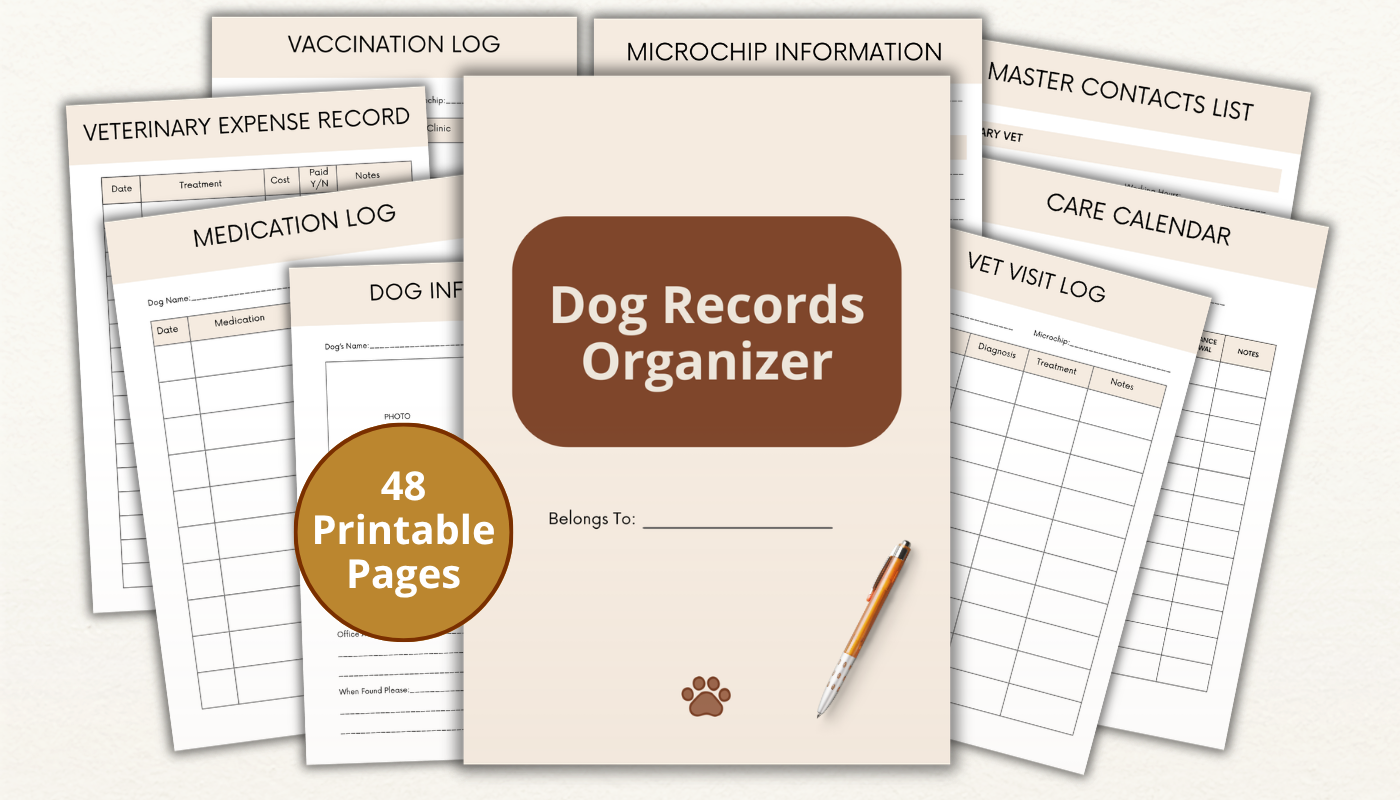
The Dog Records Organizer consists of 27 printable checklists and trackers - over 48 pages - to help keep your dog records neatly organized in one safe place.
Learn More About The OrganizerPrescription and Medication Costs
Ongoing medications, flea and tick prevention, and heartworm treatments are regular expenses that belong in any dog cost tracker.
These costs can vary depending on your dog’s size, age, and health needs.
- Medication name
- Prescription or over-the-counter status
- Dispensing date
- Quantity supplied
- Days of supply
- Cost per dose or per package
- Total amount paid
- Pharmacy or clinic where purchased
Tracking medication costs separately from general vet visit costs gives you a clearer breakdown when reviewing your annual totals.
Pet Insurance Premiums and Claims
If you carry pet insurance, this section keeps your policy details and reimbursement history organized in one place.
It’s a core part of any complete pet expense record sheet.
- Insurance provider name
- Policy number
- Monthly or annual premium amount
- Policy renewal date
- Date a claim was submitted
- Claim reference number
- Amount claimed
- Amount reimbursed
Having your claim history recorded makes it easier to evaluate whether your coverage is meeting your needs at renewal time.
Grooming and Coat Care Costs
Professional grooming, nail trims, and bathing services are predictable expenses for many dogs.
Including them in your dog expense tracker helps you plan for these appointments in advance.
- Grooming appointment date
- Salon or groomer name
- Services performed
- Cost of each service
- Tip amount
- Total paid
- Date of next scheduled appointment
For dogs on a regular grooming schedule, this section can also serve as a useful appointment reference.
Supplies and Equipment Purchases
Leashes, beds, crates, food bowls, and seasonal items are easy to overlook in a monthly expense log because they tend to feel like one-off purchases.
Tracking them reveals their true cumulative cost over the year.
- Item name and description
- Date of purchase
- Retailer or store name
- Purchase price
- Reason for purchase (replacement, first-time, upgrade)
- Notes on condition or brand
Reviewing your supply spending annually can help you identify patterns and plan ahead for replacement items.
Boarding and Pet Sitting Costs
Boarding fees and pet sitter rates vary widely, and these expenses often coincide with vacations or busy periods when spending is already elevated.
A dedicated section in your annual dog expense record helps you account for these costs accurately.
- Boarding facility or sitter name
- Dates of service
- Number of nights or days
- Daily or nightly rate
- Add-on services requested
- Total amount paid
- Deposit paid and deposit applied
Tracking these costs over multiple years can help you budget more accurately for travel periods.
Training Classes and Behavioral Services
Puppy classes, refresher courses, or one-on-one behavioral sessions represent meaningful investments in many households.
These belong in your dog ownership cost log even if they are occasional.
- Class or service name
- Provider or trainer name
- Session dates
- Number of sessions included
- Cost per session or total package cost
- Amount paid to date
- Notes on progress or follow-up sessions
Including these costs in your records gives you a full picture of what you invest in your dog beyond routine care.
Dog Walker and Daycare Fees
Regular dog walking or daycare is a consistent monthly expense for many working dog owners.
These costs belong in their own section rather than being grouped with boarding, since they tend to occur on a weekly or daily basis.
- Service provider name
- Type of service (walk, half day, full day)
- Service date
- Duration of service
- Rate charged
- Total amount paid
- Gratuity or tip recorded separately
Separating recurring service costs from occasional boarding fees makes your monthly totals easier to read.
Licensing and Registration Fees
Annual dog license fees are a legal requirement in most US counties and municipalities, and they belong in a complete dog expense tracker even when they are relatively small.
- Licensing jurisdiction (city, county)
- License number
- Issue date
- Expiration date
- Fee paid
- Proof of rabies vaccination attached or referenced
Keeping this section updated ensures you have documentation of compliance in one organized location.
Annual Summary Totals
A summary section pulls together your full year of tracking into a clear, category-by-category overview.
This is one of the most useful parts of any complete dog monthly expense log.
- Total spent on food and treats
- Total spent on veterinary care
- Total spent on medications
- Total spent on insurance premiums
- Total spent on grooming
- Total spent on supplies and equipment
- Total spent on boarding and pet sitting
- Grand total for the year
Reviewing your annual summary helps you set a more accurate budget for the following year and spot categories where spending has shifted.
Keeping Your Dog Expense Records Organized Over Time
A dog expense tracker is most useful when it is updated consistently and reviewed regularly. Logging expenses as they happen, rather than trying to reconstruct them at the end of the year, gives you a far more accurate record to work from.
Over time, your records reveal the true cost patterns of your dog’s care, from the predictable monthly costs to the one-off purchases that add up more than expected.
Whether you track by month or by year, having everything in one dedicated place makes the process straightforward.
The Dog Records Organizer includes a structured expense tracking page designed to keep all of these categories in one place, ready to fill in and reference at any time.
Ready to set up the full system?
The Dog Records Organizer consists of 27 checklists and trackers - over 50 pages in total - to help you keep your dog records safe and organized in one place.
Learn More About The Dog Records Organizer