
Dropping your dog off for a boarding stay goes more smoothly when you have everything organized ahead of time.
What This List Is For:
This checklist covers the records, documents, supplies, and information that most boarding facilities request, so you arrive prepared, and your dog’s stay starts without a hitch.
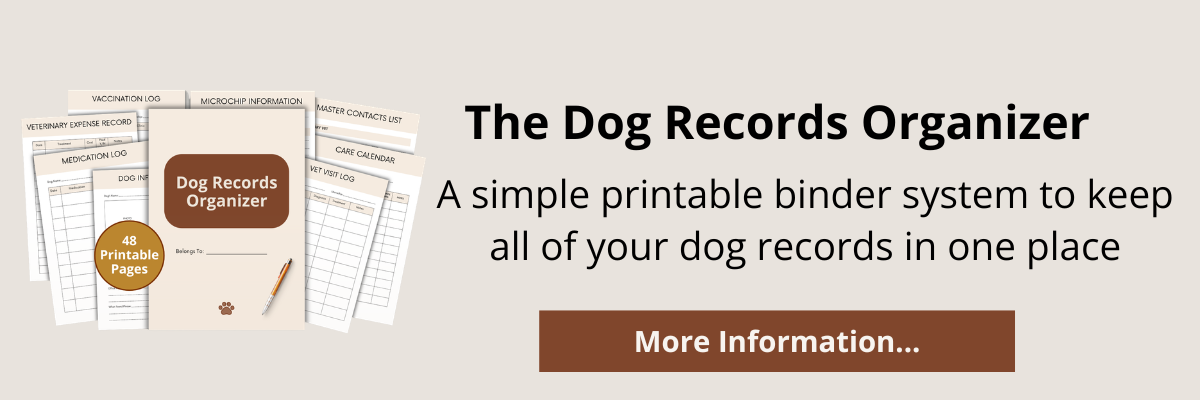
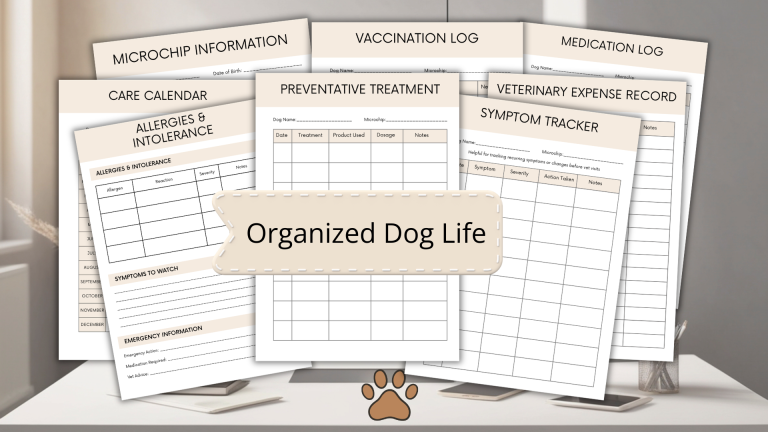
📄 You can also find a blank Dog Boarding Checklist page inside the Dog Records Organizer, which you can personalize to your own needs.
Some dog owners store this sheet in the Travel & Boarding Section of their organizer to keep essential dog record details easy to reference.
What Is A Dog Records Organizer?
A dog records organizer is a simple way to keep your dog’s important paperwork and information together in one organized place. For a full overview of how the system works, visit our Dog Records Checklist guide.
Below are the details typically included on a complete dog boarding checklist.
Information to Include on a Dog Boarding Checklist
Vaccination and Health Records
Most boarding facilities require proof of current vaccinations before they will accept a dog for a stay.
Having your records organized before you call to book saves time and avoids last-minute scrambles.
This is one of the most important parts of your dog boarding paperwork to have ready.
- Rabies vaccination date and expiration
- Distemper vaccination date and expiration
- Bordetella (kennel cough) vaccination date and expiration
- Canine influenza vaccination date and expiration
- Name and contact information of your veterinary clinic
- Date of most recent wellness exam
Keep a copy of your dog’s vaccination records in a consistent place so they are easy to locate whenever you need them.
Owner and Emergency Contact Information
Boarding facilities need to know how to reach you during your dog’s stay and who to contact if you are unavailable.
Having this information written out clearly is one of the simplest things you can do to prepare.
- Your full name and primary phone number
- Your location or travel destination during the stay
- A secondary contact name and phone number
- Your veterinarian’s name and clinic phone number
- An alternate emergency contact who knows your dog
- Permission notes for any decisions the facility may need to make
Writing this out in advance means you are not trying to remember phone numbers at drop-off.
Medication and Supplement Details
If your dog takes any daily medications or supplements, the kennel facility needs clear, written instructions to follow.
Verbal instructions at drop-off are easy to forget or misinterpret.
- Medication name and dosage
- Administration schedule, including time of day
- Whether medication should be given with food
- Supplement name and daily amount
- Any known reactions or sensitivities
- Veterinarian contact for medication questions
Label all medication containers clearly with your dog’s name and the facility name before drop-off.
Feeding Instructions
Even if a boarding facility provides food, many dog owners bring their own to maintain consistency and avoid digestive upset.
Either way, clear feeding instructions are an important part of your dog boarding packing list.
- Brand and type of food your dog eats
- Amount fed per meal
- Number of meals per day and approximate timing
- Any foods your dog cannot have
- Treat preferences or restrictions
- Instructions for any food toppers or mix-ins
Pre-portioning meals into labeled bags before drop-off makes the facility’s job easier and reduces the chance of overfeeding or underfeeding.
Behavioral and Routine Notes
Kennel staff cannot know your dog the way you do, but written notes help them provide more consistent care.
This is especially useful for dogs with specific preferences or sensitivities.
- Whether your dog is comfortable with other dogs
- Any known anxiety triggers or stressors
- Preferred sleeping arrangement or location
- Walk routine and exercise preferences
- Commands your dog responds to
- Notes on how your dog typically behaves in new environments
Clear behavioral notes allow staff to approach your dog in a way that feels familiar rather than stressful.
Supplies to Pack for Dog Boarding
Having a dog boarding packing list alongside your documents means nothing is forgotten on drop-off day.
Most facilities have their own supplies, but personal items from home provide comfort and familiarity.
- Enough food for the full stay, plus one extra day
- Daily medications, clearly labeled
- A familiar blanket or sleeping item
- One or two favorite toys
- Your dog’s collar with current ID tags
- Leash
Label every item with your dog’s name before it goes into the boarding bag.
Identification and Microchip Information
Current identification is important any time your dog is in someone else’s care.
Confirming this information before a boarding stay is a practical step that is easy to overlook.
- ID tag currently attached to collar
- Name and contact number on ID tag verified as current
- Microchip number recorded
- Microchip registry name and account status
- Registration confirmation that contact details are up to date
- Secondary tag with emergency contact if applicable
Microchip registration details are worth confirming every year, not only before boarding stays.
Booking and Facility Information
Keeping a record of your booking details means you have everything in one place if you need to contact the facility during your trip.
This is a simple addition to your dog boarding paperwork that is easy to skip and easy to regret.
- Facility name and full address
- Primary contact phone number for the facility
- Your booking confirmation number or reference
- Drop-off date, time, and name of staff contact
- Pick-up date and time
- Any facility-specific requirements noted at booking
Storing this alongside your dog’s records means it is where you expect it when you need it.
Documents to Complete Before Drop-Off
Many facilities require forms to be completed before or at drop-off, so knowing what’s expected in advance prevents delays on a busy travel day.
- Facility intake form, if required
- Emergency medical authorization form, if provided
- Permission form for any specific services, such as grooming or group play
- Agreement to vaccination policy
- Payment authorization for the stay
- Any facility-specific waivers or agreements
Confirming paperwork requirements when you book gives you time to gather anything the facility needs.
Post-Stay Notes
Keeping brief notes after a boarding stay helps you stay organized for future bookings and builds a useful record over time.
- Dates of stay
- Facility name and contact used
- Notes on how your dog did during the stay
- Any health observations noted at pick-up
- Whether you would use the facility again
- Any follow-up needed, such as a vet check
A short record after each stay becomes a helpful context for future planning, especially if you board regularly.
Having a structured dog kennel checklist in place before every stay means you arrive at drop-off with everything ready and nothing forgotten.
It also means the facility has everything they need to care for your dog consistently from day one.
The Dog Records Organizer includes a dedicated Dog Boarding Checklist page alongside your dog’s vaccination records, medication details, emergency contacts, and other essential documentation, so everything stays in one organized place ready for the next time you travel.