
Professional grooming appointments keep your dog’s coat in good shape, but what happens between visits matters just as much.
A dog home grooming checklist gives you a consistent structure for the brushing, coat checks, and maintenance tasks that keep your dog comfortable and well-kept from one appointment to the next.
What This List Is For:
This list helps you track the at-home grooming tasks that support your dog’s coat, skin, and hygiene between professional appointments.
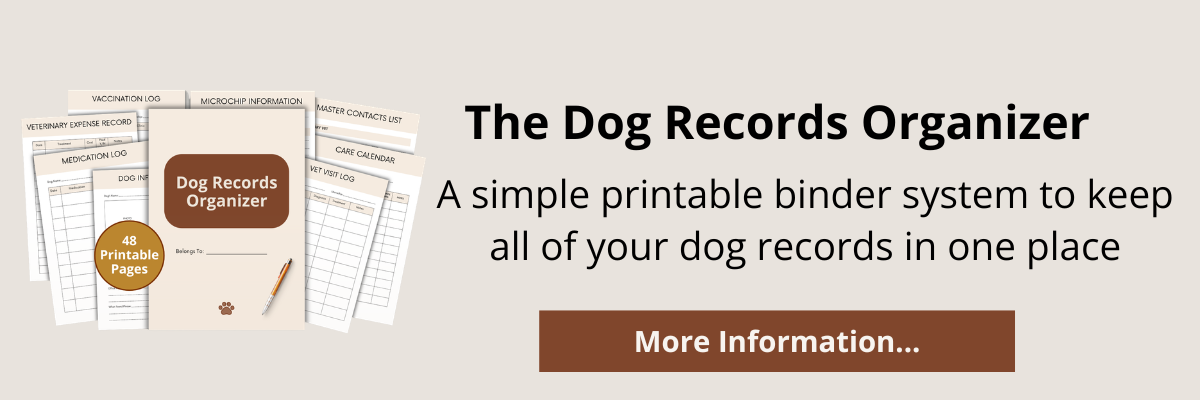
📄 You can find a printable dog grooming log and blank checklist page inside the Dog Records Organizer, which you can personalize to fit your dog’s coat type and grooming schedule.
Many dog owners keep this checklist alongside their Dog Grooming Record Sheet so that both professional and at-home grooming details are stored in the same section of their binder.
The Dog Records Organizer is a complete binder system for keeping all of your dog’s essential records in one structured place. You can learn more in the Dog Records Organizer guide.
Below are the details typically included on a dog home grooming checklist.
Information to Include in a Dog Home Grooming Checklist
Brushing and Coat Maintenance
Regular brushing is one of the most important parts of a home grooming routine for dogs, regardless of coat length or type.
Tracking brushing frequency and tools used helps you stay consistent and gives you useful notes to share with your groomer at the next appointment.
- Date of brushing session
- Brush or comb type used
- Time spent brushing
- Coat condition observed (smooth, tangled, matted, shedding heavily)
- Areas requiring extra attention such as behind the ears or under the legs
- Any mats or knots found and how they were addressed
- Products applied such as detangler or conditioning spray
Keeping a brushing log helps you identify patterns in your dog’s coat between professional grooming visits.
At-Home Dog Grooming Supplies List
Having the right supplies on hand makes every home session easier and more consistent.
Tracking what you own and what needs to be replaced ensures your dog grooming at home checklist is always ready to use.
- Slicker brush
- Undercoat rake or deshedding tool
- Metal comb for finishing
- Nail clippers or nail grinder
- Styptic powder for nail trimming
- Dog-safe shampoo and conditioner
- Ear cleaning solution and cotton balls
Reviewing your at-home dog grooming supplies list regularly helps you restock before you run out during a scheduled session.
Nail Care Between Appointments
Nails that grow too long between appointments can become uncomfortable, so many owners trim or file them at home.
Tracking nail care dates helps you stay on a consistent schedule and notice if nails are growing faster than usual.
- Date of nail trim or grind
- Tool used (clippers, grinder, or both)
- Nails trimmed successfully
- Any nails that needed extra filing
- Whether styptic powder was needed
- Condition of paw pads noted
- Next nail check scheduled
A consistent nail care log makes it easier to time your at-home trims so your dog arrives at each professional appointment in good condition.
Ear Checks and Cleaning
Ears should be checked regularly as part of any dog coat care checklist, even if full cleaning is not always needed.
Logging ear check dates and observations gives you a useful reference if your dog ever develops recurring ear concerns.
- Date of ear check
- Appearance of ear canal (clean, waxy buildup, debris present)
- Odor noted
- Cleaning performed
- Product used for cleaning
- Any sensitivity or resistance noted during cleaning
- Whether a follow-up check is needed
Recording ear observations consistently means you have a clear history to reference between grooming appointments and vet visits.
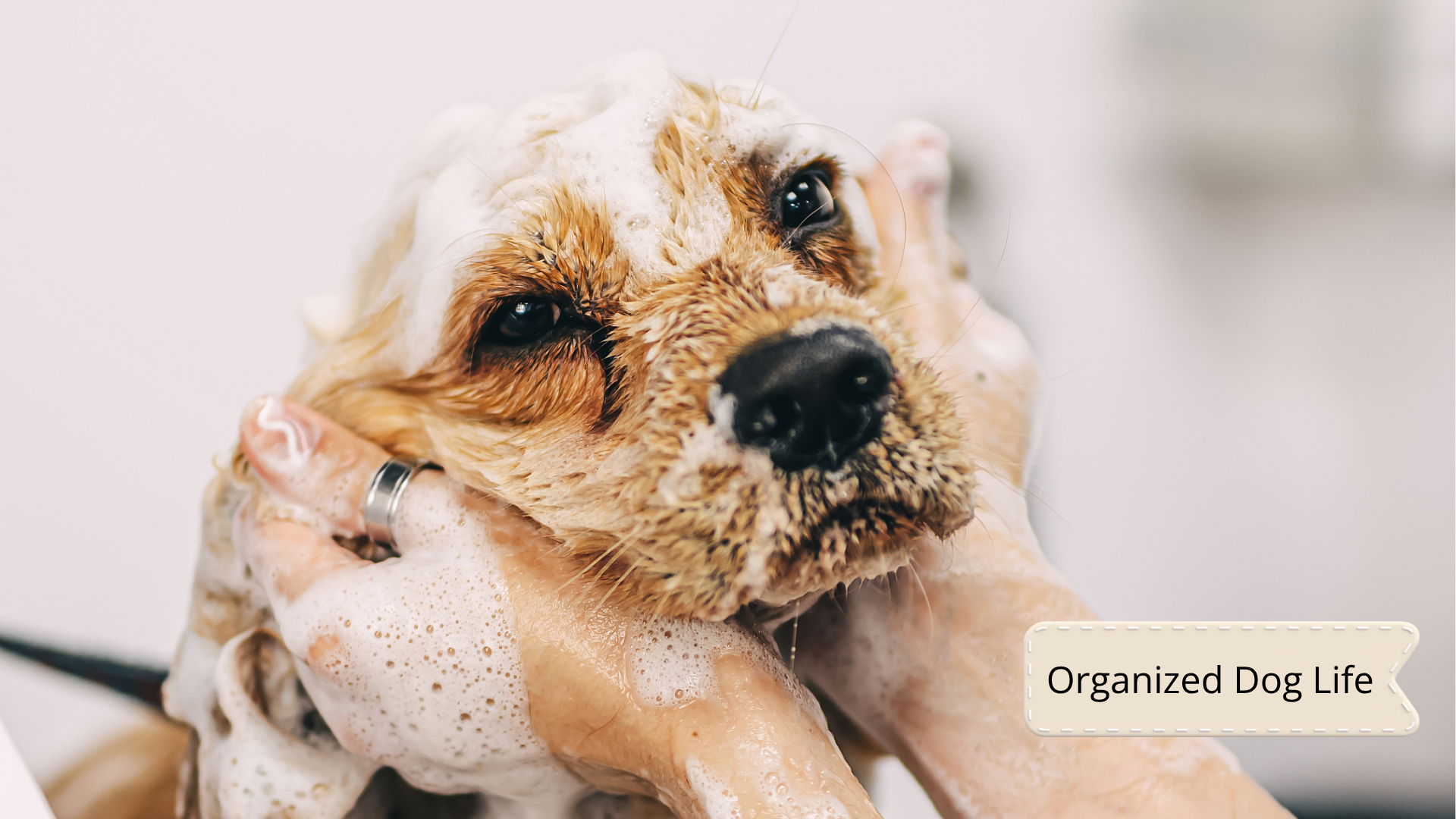
Between Grooming Appointment Checklist: Bathing at Home
Not every dog needs a bath between professional appointments, but some coat types, lifestyles, or activities make occasional at-home baths necessary.
Logging when and how you bathe your dog at home helps you track product use and coat response over time.
- Date of bath
- Reason for bath (muddy, odor, between scheduled appointments)
- Shampoo and conditioner used
- Coat condition before and after bath
- Drying method used (towel, blow dryer, air dry)
- Any skin observations such as dryness or redness
- Time elapsed since last bath
This section of your between grooming appointment checklist helps connect at-home bathing habits to what your groomer observes at the next visit.
Eye Area and Facial Coat Checks
The area around a dog’s eyes can accumulate discharge or become stained, particularly in dogs with lighter coats or flatter faces.
Tracking facial coat checks helps you stay on top of maintenance that can otherwise be easy to overlook between appointments.
- Date of facial check
- Eye discharge present
- Area cleaned
- Product used for cleaning
- Facial hair trimmed or tidied
- Staining noted around eyes or muzzle
- Sensitivity observed during cleaning
Consistent facial coat checks are a small but important part of a complete dog grooming at home checklist.
Dental Care Between Appointments
Many professional groomers offer teeth brushing as an add-on service, but at-home dental maintenance is something many dog owners also manage between visits.
Logging at-home dental care dates and products used gives you a clear record of how consistently it is being done.
- Date of dental care session
- Product used (toothbrush, finger brush, dental wipe, water additive)
- Dog’s cooperation level
- Areas brushed or wiped
- Observations about teeth or gum appearance
- Any odor noted
- Next session planned
Tracking dental care alongside the rest of your home grooming routine for dogs keeps all care notes in one organized place.
Paw and Pad Condition Log
Paws and pads are easy to overlook between appointments, but benefit from regular checks, especially after outdoor activity, seasonal changes, or walks on rough terrain.
Noting paw and pad condition helps you catch any concerns early and keeps your records complete.
- Date of paw check
- Pad condition (cracked, dry, smooth, worn)
- Any debris or foreign objects found between toes
- Fur trimmed between paw pads
- Moisturizer or balm applied
- Nail condition observed
- Any limping or sensitivity noted during check
A paw and pad log rounds out your dog home grooming checklist and helps you keep consistent notes across all areas of at-home care.
Coat Observation Notes
Between appointments, your dog’s coat can change in response to season, diet, or routine.
Keeping brief observation notes each time you groom helps you build a useful record of what is normal for your dog.
- Date of observation
- Overall coat condition (shiny, dull, dry, healthy)
- Shedding level (light, moderate, heavy)
- Skin visible through coat
- Any unusual patches or changes noted
- Products used at the last professional appointment are still performing well
- Changes since last grooming session
Coat observation notes are one of the most useful things you can bring to a professional grooming appointment to help your groomer understand recent changes.
Grooming Schedule and Frequency Log
A dog coat care checklist is most effective when it is tied to a consistent schedule.
Logging when you completed each task helps you spot gaps and plan your next home session with confidence.
- Date of last full home grooming session
- Individual tasks completed during the session
- Tasks skipped and reason
- Frequency goal for brushing (daily, every two days, weekly)
- Next scheduled home session
- Next professional appointment date
- Any tasks to carry over to the next session
A grooming schedule log helps you stay consistent without having to rely on memory alone.
Keeping a Dog Home Grooming Checklist Over Time
A dog home grooming checklist becomes a genuinely useful record when it is maintained consistently over weeks and months.
It gives you a clear picture of what your dog’s coat needs between appointments, which tools work best, and how at-home care connects to what your groomer observes.
It is also a helpful companion to your Dog Grooming Record Sheet, which captures everything from professional appointments in the same organized format.
Keeping both records together means you have a complete grooming history that covers everything from the salon to your own home sessions.
If you would like one structured place to keep all of your dog’s records, the Dog Records Organizer includes both grooming pages alongside every other log, checklist, and record your dog’s care requires.