
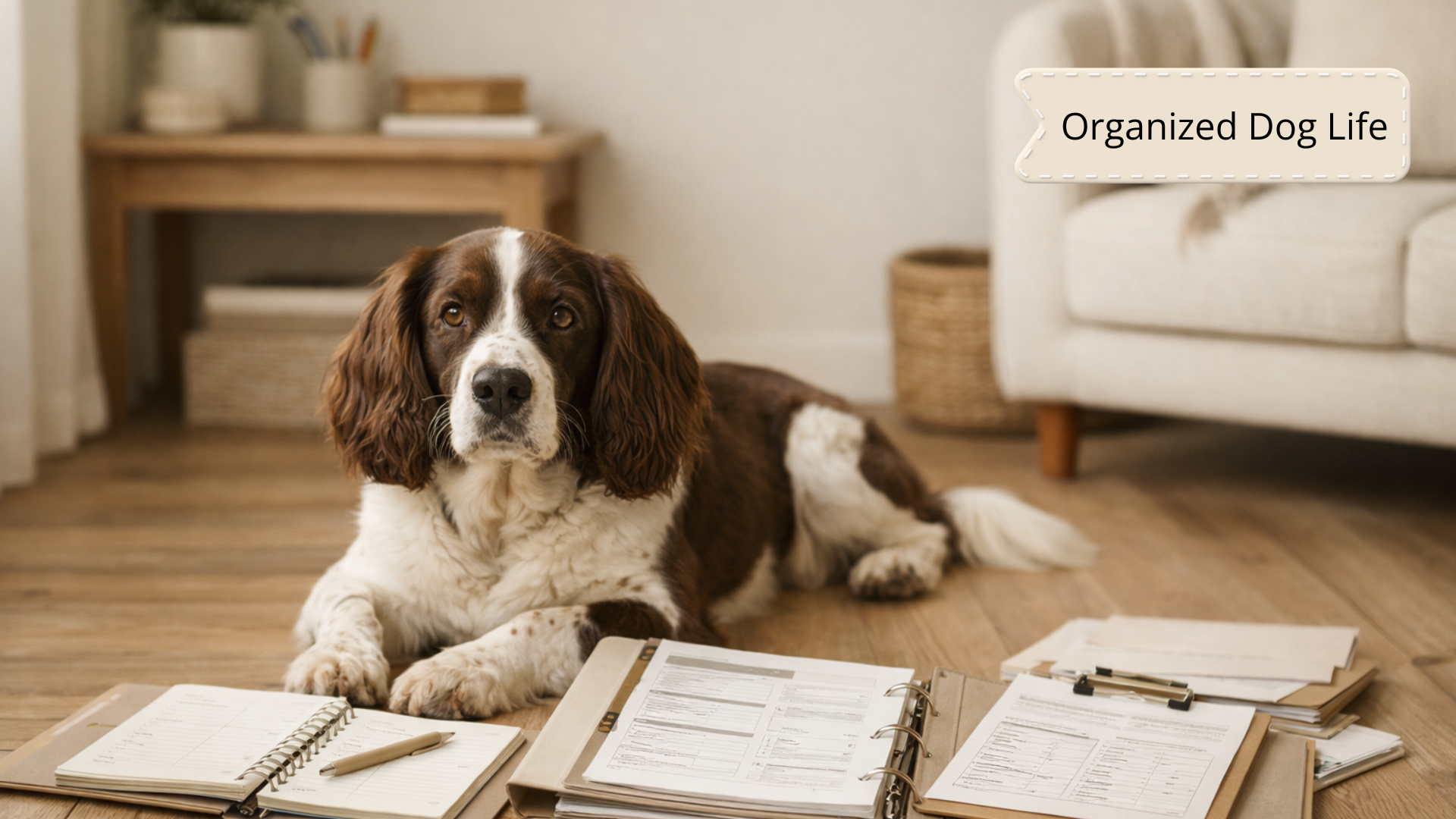
Your dog’s annual wellness exam is one of the most important appointments of the year for staying on top of their care.
Having a clear checklist ready means you arrive prepared, leave with complete notes, and have everything documented for your dog’s records going forward.
What This Checklist Is For:
This list helps you organize what to bring, what gets reviewed at the appointment, and what to record afterward.
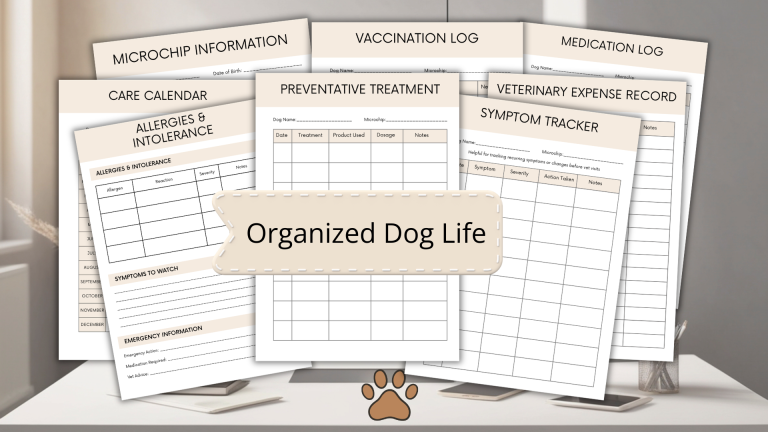
📄 You can find related blank health record pages inside the Dog Records Organizer, which you can print off and personalize to your own needs.
These sheets are often stored in the Health & Medical Section of a dog records organizer to keep key information easy to access when needed.
What Is A Dog Records Organizer?
A dog records organizer keeps your dog’s key paperwork and information organized together so it’s easy to find when you need it. For a full overview of how the system works, visit our Dog Records Checklist guide.
Below are the details typically included on a dog’s annual wellness exam checklist.
Information to Include in a Dog Annual Wellness Exam Checklist
Documents and Records to Bring
Arriving at your dog’s yearly exam with the right paperwork saves time and helps your vet review your dog’s full history at a glance.
- Dog’s name, breed, age, and date of birth
- Previous vaccination records and due dates
- Current medications and dosages
- List of any supplements your dog takes
- Pet insurance card or policy number
- Records from any specialist visits since the last exam
- Any notes about changes in behavior, appetite, or energy
Having these items organized before the appointment means you spend your time with the vet on what matters, not searching through paperwork.
Pre-Appointment Checklist
There are a few practical steps to complete before you leave the house that will help the appointment run more smoothly.
- Collect a fresh stool sample in a sealed container
- Note your dog’s current weight if you have a home scale
- Write down any questions or concerns you want to raise
- Confirm whether fasting is required before the visit
- Check if your vet requires any forms completed in advance
- Gather your dog’s leash and collar or harness
- Confirm your appointment time and the clinic’s location
Completing these steps in advance helps you make the most of your time during the annual vet visit checklist appointment.
Basic Physical Exam Records
The vet will conduct a nose-to-tail physical assessment, and recording the results gives you a useful baseline for comparison year over year.
- Weight recorded at the appointment
- Body condition score noted by the vet
- Temperature reading
- Heart rate and respiratory rate
- Eyes: any findings noted
- Ears: any findings noted
- Teeth and gum condition
- Coat and skin condition
- Lymph nodes checked
Tracking these results each year as part of your yearly dog health records helps you notice gradual changes over time.
Vaccination Review Records
Your vet will assess which vaccines are current and which are due, and this is one of the most important sections to document carefully.
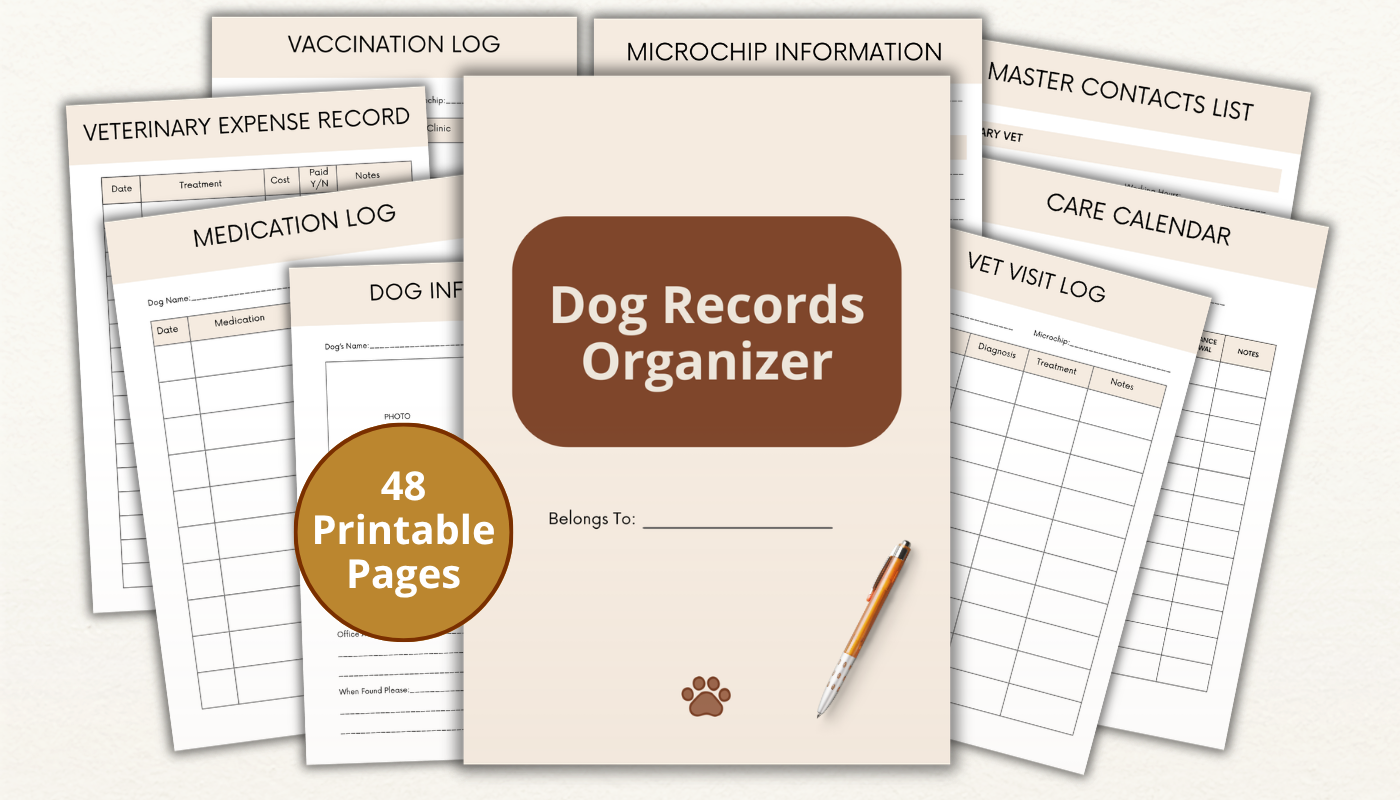
Want a Ready Made Version?
The Dog Records Organizer consists of 27 printable checklists and trackers - over 48 pages - to help keep your dog records neatly organized in one safe place.
Learn More About The Organizer- Rabies vaccine status and next due date
- DHPP (distemper, hepatitis, parvovirus, parainfluenza) status
- Bordetella status and next due date
- Leptospirosis status if applicable
- Lyme disease vaccine status if applicable
- Canine influenza status if applicable
- Any vaccines deferred and reason noted
Recording each vaccine by name, date administered, and next due date keeps your dog’s wellness exam records complete and easy to reference.
Parasite Prevention Records
Your vet will review your current prevention protocols and may update recommendations based on your dog’s lifestyle and region.
- Heartworm test result and date
- Fecal exam result and date
- Current flea and tick prevention product name and dose
- Current heartworm prevention product name and dose
- Next recommended flea and tick product refill date
- Any parasite concerns were discussed at the visit
Keeping parasite prevention records alongside your dog vet appointment checklist ensures nothing is missed between visits.
You can find a collection of related dog record pages inside the Dog Records Organizer, ready to print and fill in.
Diagnostic and Lab Work Records
Depending on your dog’s age and health history, the vet may recommend additional testing, and recording the results is essential for ongoing reference.
- Blood work ordered: yes or no
- Complete blood count (CBC) result noted
- Blood chemistry panel result noted
- Urinalysis ordered: yes or no
- Urinalysis result noted
- Any additional imaging or diagnostics recommended
- Lab results filed or provider portal accessed
These results are a core part of your dog’s annual vet visit checklist and should be stored alongside the rest of your dog’s medical paperwork.
Dental Health Records
Dental health is reviewed at most annual exams, and tracking the vet’s notes helps you plan for any follow-up care.
- Dental condition grade or notes from the vet
- Tartar or plaque build-up noted
- Any loose or broken teeth identified
- Professional cleaning recommended: yes or no
- At-home dental care discussed
- Dental care product recommended by vet
- Next dental review date noted
Recording dental notes each year as part of your yearly dog health records makes it easy to see whether your dog’s dental health is improving or declining.
Weight and Nutrition Discussion Records
Most vets will discuss your dog’s diet and weight management during the annual exam, and noting the recommendations helps you stay consistent throughout the year.
- Current weight recorded
- Ideal weight range discussed
- Current food brand and formula noted
- Feeding amount per day noted
- Any diet changes recommended
- Supplement recommendations noted
- Exercise discussion summary
Storing nutrition notes within your dog wellness exam records means you have a clear reference point at the next appointment.
Age-Related and Breed-Specific Notes
Your vet may raise specific considerations based on your dog’s age, size, or breed during the annual exam.
- Age category noted (puppy, adult, senior)
- Senior exam schedule discussed if applicable (biannual recommendation)
- Breed-specific concerns mentioned
- Joint health or mobility discussion noted
- Any early screening recommendations noted
- Referral to a specialist discussed: yes or no
- Follow-up appointment scheduled: yes or no
Noting these details makes future appointments more productive and ensures nothing falls through the cracks between visits.
Post-Appointment Records and Follow-Up
After the appointment, recording what was discussed and what comes next is just as important as the visit itself.
- Date and clinic name recorded
- Vet’s name noted
- Appointment cost recorded
- Pet insurance claim filed: yes or no
- Any new prescriptions filled and noted
- Follow-up appointment date recorded
- Any items to monitor at home noted
Completing this section closes the loop on your annual vet visit checklist for dogs and keeps your records current.
Questions to Ask at the Annual Wellness Exam
Having a list of prepared questions ensures you leave the appointment with a full picture of your dog’s current health status.
- Are all vaccinations up to date or does anything need to be booked separately?
- Is my dog’s weight appropriate for their age and breed?
- Should we consider biannual exams given my dog’s age?
- Are there any changes to the recommended parasite prevention protocol?
- Is there anything in the exam findings I should monitor at home?
- Are there any breed-specific screenings I should plan for?
- What is the recommended timeline for the next appointment?
Reviewing this questions section before the visit ensures you use your time with the vet fully and come home with clear next steps.
Using This Checklist as Part of Your Dog’s Records System
A dog annual wellness exam checklist works best when it is part of a larger system, not a standalone piece of paper that gets lost after each visit.
When you store your completed checklist alongside your vaccination records, lab results, and medication logs, you build a running history that makes every future appointment more efficient.
Over the years, this kind of documentation gives you a clear picture of trends in your dog’s health, including weight changes, shifting dental grades, or updated parasite prevention protocols.
The Dog Records Organizer includes a dedicated section for annual wellness exam records, so every appointment has its own structured page ready to complete and file.
Ready to set up the full system?
The Dog Records Organizer consists of 27 checklists and trackers - over 50 pages in total - to help you keep your dog records safe and organized in one place.
Learn More About The Dog Records Organizer