

Keeping your dog’s records organized makes everyday care easier and helps you quickly locate important information when it is needed.
A clear dog records checklist helps dog owners understand which documents are worth keeping, so important details are not lost or forgotten.
What This Checklist Is For:
This list helps you identify the most important documents and records commonly kept for a dog, so they can be organized and easy to access when needed.
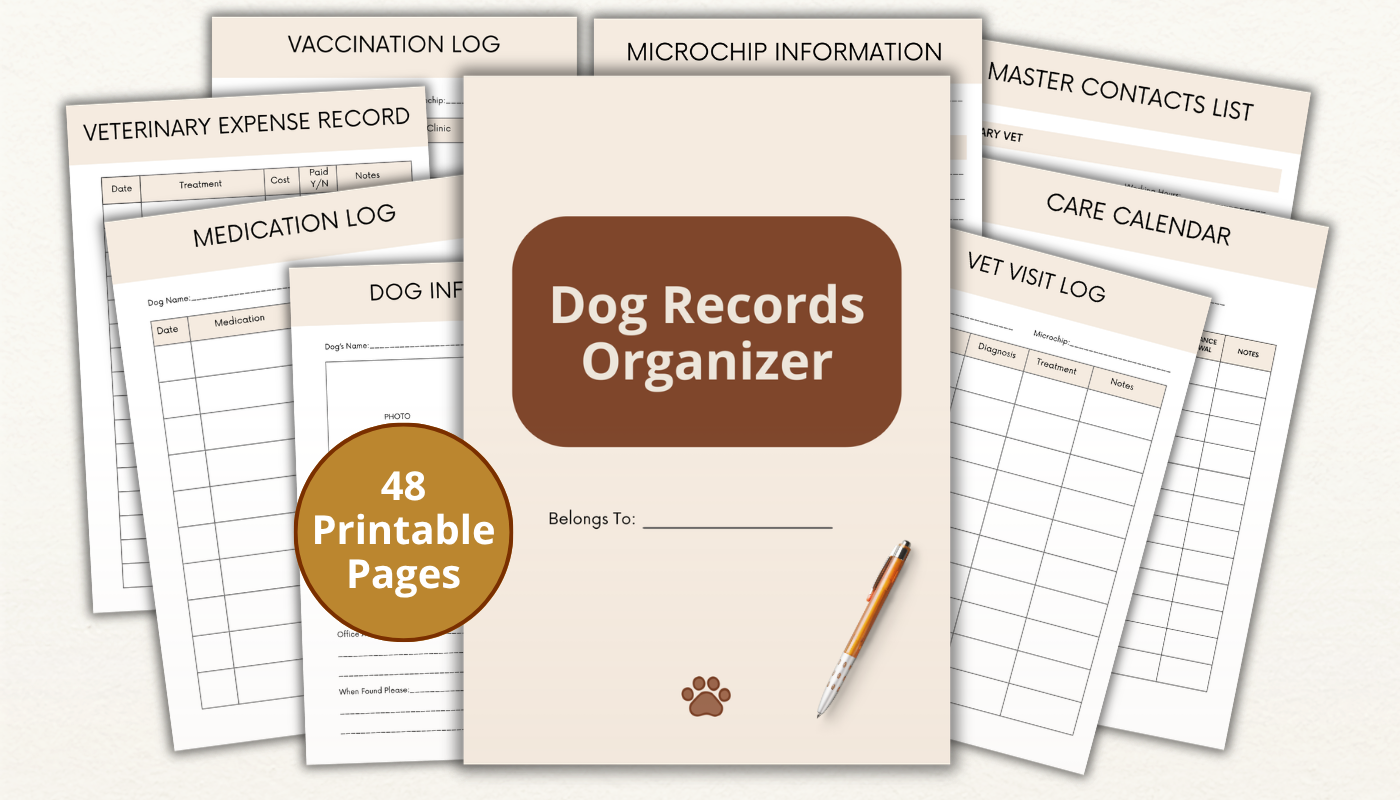
📄 You can find many of these blank record pages inside the printable Dog Records Organizer, which you can personalize to your own dog’s needs.
Many dog owners keep their dog records together using a structured binder system.
What Is A Dog Records Organizer?
The Dog Records Organizer is a structured binder system designed to keep dog records, care logs, and important paperwork together in one place so information can be located quickly when it is needed.
Below is an overview of the types of records many dog owners choose to keep as part of a dog records system.
Dog Records System Overview
Keeping dog records organized usually involves several types of documents, information sheets, and tracking logs.
Many dog owners keep these records together so that important information can be found quickly when needed.
A typical dog records system includes several categories of information that document identification details, veterinary care, daily routines, and emergency contacts.
Common sections of a dog records system include:
- Puppy Records And Early Documentation
- Veterinary And Health Records
- Preventative Care Tracking
- Care And Routine Logs
- Emergency Contact Information
- Travel And Boarding Documentation
- Dog Expense Tracking
Each of these categories represents a type of information that dog owners often record and maintain throughout their dog’s life.
The sections below explain the types of records commonly included in a complete dog records checklist.
Identification Information
A dog identification record contains the basic information used to identify your dog.
Many owners keep this page near the front of their records so the most important details are easy to reference.
Want a Ready Made Version?
The Dog Records Organizer consists of 27 printable checklists and trackers - over 48 pages - to help keep your dog records neatly organized in one safe place.
Learn More About The OrganizerIdentification details are often required when registering your dog, scheduling veterinary visits, completing boarding forms, or preparing emergency information for caregivers.
Typical identification details include:
- Dog’s Full Name
- Breed Or Breed Mix
- Date Of Birth Or Estimated Age
- Microchip Number
- Registration Number (If Applicable)
- Physical Description And Markings
Keeping this information recorded in one place ensures it can be quickly located whenever it is required.
Owner Contact Information
Many dog records systems include a page that lists the owner’s contact details along with an additional emergency contact.
This information helps ensure caregivers can reach the correct person if needed.
Recording this information also simplifies situations where forms need to be completed for veterinary visits, boarding facilities, grooming appointments, or travel.
Common owner contact information includes:
- Primary Owner Name
- Phone Number
- Email Address
- Home Address
- Emergency Contact Person
- Emergency Contact Phone Number
Having these details clearly recorded helps ensure important contact information is always easy to find.
Veterinary Clinic Details
Recording your dog’s veterinary clinic details ensures the clinic’s contact information can be accessed quickly whenever appointments need to be scheduled or veterinary records need to be shared.
Many dog owners also record contact information for an emergency veterinary clinic in case care is needed outside regular clinic hours.
If you have ever left a vet appointment and forgotten what was said, a vet visit log for dogs gives you a consistent place to record every detail from diagnosis to follow-up care.
Typical veterinary contact information includes:
- Veterinary Clinic Name
- Clinic Phone Number
- Clinic Address
- Primary Veterinarian Name
- Emergency Clinic Contact Information
- After-Hours Veterinary Service
Keeping veterinary contact details recorded in your dog records system makes it easier to manage routine care appointments.
Vaccination Records
Vaccination records are one of the most commonly requested pieces of dog documentation.
Boarding facilities, dog daycare providers, training programs, and travel requirements often require proof of vaccinations.
Keeping a vaccination record log allows dog owners to easily review vaccination history and see when the next vaccination is due.
Typical vaccination record information includes:
- Vaccine Name
- Vaccination Date
- Next Due Date
- Administering Veterinarian
- Clinic Name
- Vaccine Batch Or Reference Number
Maintaining a clear vaccination record helps ensure this documentation is always available when it is requested.
Preventative Care Records
Preventative treatments are often given on a regular schedule throughout the year. Recording these treatments helps dog owners track when treatments were last administered and when the next treatment should be given.
Preventative care logs can help maintain consistent routines and reduce the risk of missed treatments.
Common preventative care records include:
- Flea Treatment Date
- Tick Prevention Medication
- Heartworm Prevention Medication
- Deworming Treatment Date
- Product Name Used
- Next Treatment Due Date
Recording preventative treatments creates a clear timeline of routine care activities.
Veterinary Visit Log
A veterinary visit log provides a simple way to record appointments and treatments over time.
Maintaining a log helps create a timeline of veterinary care that can be useful for future reference.
Some dog owners find it helpful to record each appointment so they can quickly review past visits and treatments.
Information typically recorded in a vet visit log includes:
- Appointment Date
- Reason For Visit
- Veterinarian Seen
- Treatment Provided
- Medication Prescribed
- Follow-Up Appointment Required
Maintaining a veterinary visit log provides a clear overview of your dog’s veterinary history.
Medication Log
When dogs require medication, a medication log can help track treatment schedules and ensure medication instructions are recorded clearly.
This type of log can be especially helpful when multiple medications are prescribed or when treatments last for several weeks.
Typical medication log details include:
- Medication Name
- Dosage Instructions
- Start Date
- End Date
- Administration Schedule
- Prescribing Veterinarian
Recording medication details creates a clear reference for treatment history.
Grooming And Care Records
Some dog owners keep a record of grooming appointments and routine care services.
While grooming records may not be essential for every dog, they can be useful for maintaining consistent care schedules.
Recording grooming visits also helps track service providers and appointment dates.
Common grooming record fields include:
- Grooming Appointment Date
- Grooming Service Performed
- Groomer Or Salon Name
- Salon Contact Details
- Coat Or Skin Notes
- Next Appointment Date
Maintaining a grooming record can help establish a consistent routine for ongoing care.
Feeding And Routine Notes
A feeding and routine record provides useful information about your dog’s daily habits.
This information is especially helpful when someone else is caring for your dog or when instructions need to be shared with a pet sitter.
Recording feeding routines can help ensure your dog’s usual schedule is followed.
Common feeding and routine details include:
- Food Brand And Formula
- Daily Feeding Amount
- Feeding Times
- Treat Preferences
- Dietary Sensitivities
- Special Feeding Instructions
Keeping this information recorded helps caregivers maintain consistent daily routines.
Emergency Information
Many dog owners include an emergency information page in their dog records system so important contacts can be located quickly during urgent situations.
This page typically contains key contact details and important reference information that may be needed immediately.
Typical emergency information includes:
- Emergency Veterinarian Contact
- Poison Helpline Number
- Microchip Registry Contact
- Pet Insurance Provider
- Emergency Caregiver Contact
- Important Medical Notes
Keeping emergency information recorded together ensures the right details are available when they are needed most.
Travel And Boarding Information
When dogs travel or stay at boarding facilities, certain documentation is often required. Preparing this information in advance can make travel or boarding arrangements much easier.
Many dog owners keep a travel or boarding information sheet within their dog records system.
Common travel information includes:
- Vaccination Verification
- Veterinarian Contact Details
- Feeding Instructions
- Medication Instructions
- Emergency Contact Person
- Microchip Number
Organizing this information in advance can simplify situations where travel or boarding documentation is requested.
Dog Expense Records
Some dog owners keep a record of dog-related expenses to better understand the ongoing cost of care.
While this is optional, tracking expenses can provide useful insight into annual spending.
Recording expenses may also help when reviewing budgets for veterinary care, food, and other services.
Typical expense records include:
- Veterinary Costs
- Pet Insurance Payments
- Grooming Expenses
- Food Purchases
- Medication Costs
- Boarding Or Training Costs
Maintaining an expense log provides a clear overview of dog care costs over time.
Summary
Keeping your dog’s records organized helps ensure important information is always easy to find when needed.
Identification details, veterinary records, preventative care logs, and emergency information all play a role in maintaining clear documentation for your dog.
Over time, these records create a complete history of your dog’s care and important milestones.
Many dog owners keep these documents together using a structured binder system such as the Dog Records Organizer, which is designed to store commonly used dog record sheets and documentation in one organized place.
Ready to set up the full system?
The Dog Records Organizer consists of 27 checklists and trackers - over 50 pages in total - to help you keep your dog records safe and organized in one place.
Learn More About The Dog Records Organizer