
Your puppy’s spay or neuter is one of the most significant procedures in their first year, and it generates more documentation than most owners expect.
Keeping that documentation in one place from the start means you are always prepared when a vet, boarding facility, or rescue program asks for proof of the procedure.
What This List Is For:
This list helps you document everything worth recording before, during, and after your puppy’s spay or neuter surgery.
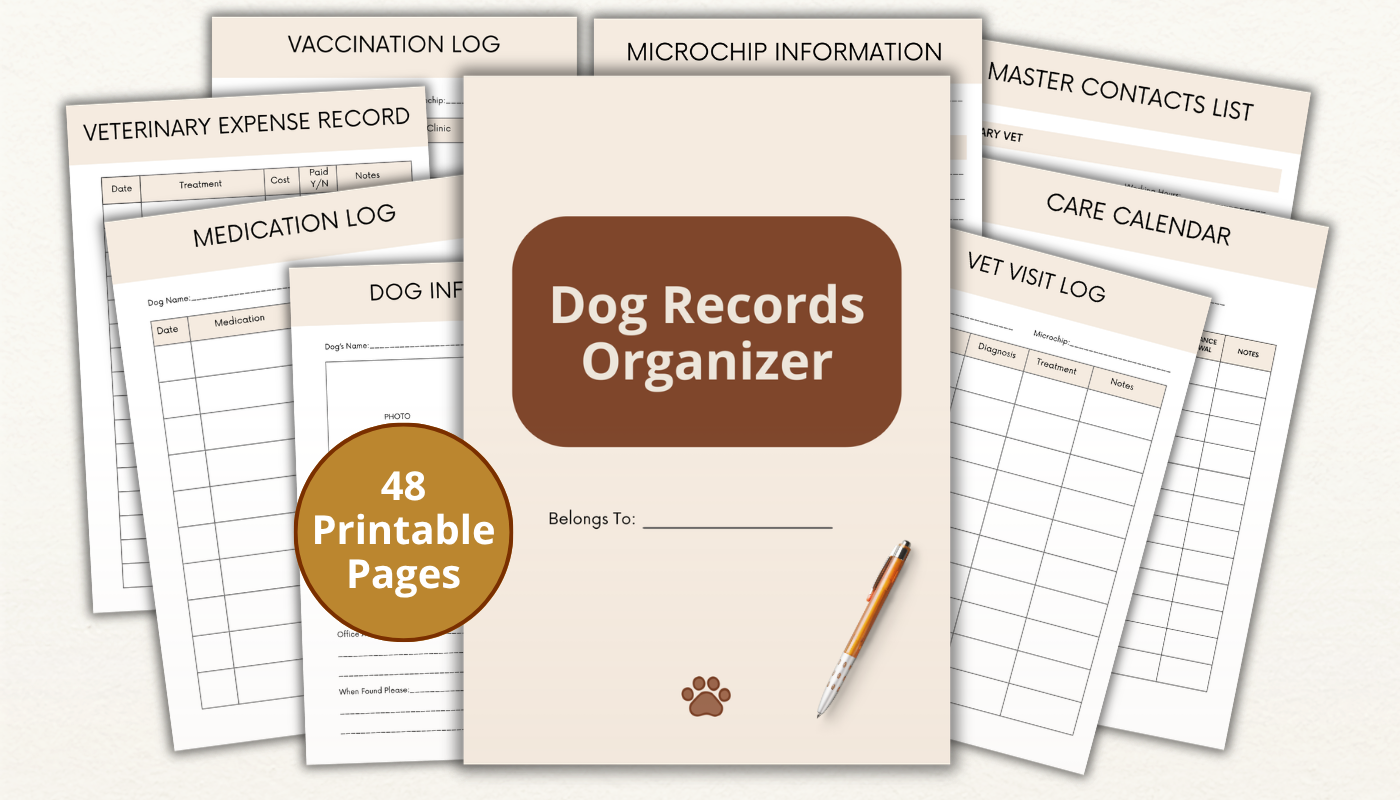
📄 You can find related blank medical & health record pages inside the Dog Records Organizer, which you can print off and personalize to your own needs.
The Dog Records Organizer is a structured binder system designed to hold all of your dog’s records, procedures, and care history in one place. You can learn more on the Dog Records Organizer hub page.
Below are the details typically included on a puppy spay neuter record template.
Information to Include in a Puppy Spay Neuter Record Template
Basic Puppy Identification
Every surgery record starts with the basics.
This section confirms that the record belongs to your dog and links it to all other documentation in your binder.
- Dog’s full name
- Date of birth or approximate age at time of surgery
- Breed
- Sex (male or female, confirms procedure type)
- Weight at time of surgery
- Microchip number
- Coat color or distinguishing markings
Having this section complete makes it easy to confirm the record belongs to your dog during any future vet appointment or facility intake.
Owner and Contact Information
This section connects the record to a responsible owner and is often required when submitting documentation to a licensing office, housing complex, or rescue program.
- Owner’s full name
- Primary phone number
- Secondary phone number or emergency contact
- Mailing address
- Email address
- Relationship to dog (owner, co-owner, foster)
Some programs that offer reduced-cost licensing for altered dogs require this information alongside proof of the procedure.
Veterinary Clinic Details
Record which clinic performed the surgery so you can follow up quickly if questions arise during the recovery period or at a future vet visit.
- Clinic or hospital name
- Veterinarian’s full name
- Clinic address
- Phone number
- Clinic website or patient portal
- Veterinarian’s license number (if listed on paperwork)
This section is especially useful if you switch vets after the procedure or if you are asked to provide a verified contact for your dog’s surgical history.
Related: Puppy Vet Visit Log Template
Procedure Information
This is the core of your spay neuter documentation and the section most likely to be requested by outside parties.
Want a Ready Made Version?
The Dog Records Organizer consists of 27 printable checklists and trackers - over 48 pages - to help keep your dog records neatly organized in one safe place.
Learn More About The Organizer- Procedure type (spay or neuter)
- Date of surgery
- Dog’s age at time of procedure
- Anesthesia type noted on discharge paperwork
- Surgical technique noted (if included in clinic records)
- Pre-surgical weight confirmed on the day of the procedure
- Any complications noted by the clinic
Keeping a copy of the clinic’s discharge summary alongside this record page gives you a complete picture of the procedure.
Pre-Surgery Records
Puppies are often required to pass a basic health check before surgery.
Recording what was assessed beforehand helps you understand your puppy’s full picture around the time of the procedure.
- Date of pre-surgical exam
- Health clearance noted (yes or no)
- Fasting instructions followed (noted for reference)
- Current vaccinations confirmed on intake
- Heartworm or parasite status noted on pre-op intake
- Any medications paused before surgery
This section supports your dog’s broader puppy records and connects naturally to your vaccination log and first-year health timeline.
Recovery and Post-Operative Notes
The recovery period is short, but the details are worth keeping.
If your puppy has a follow-up concern or needs the information for a future surgical procedure, this section gives you a clear point of reference.
- Discharge date and time
- Instructions provided at discharge
- Activity restrictions noted (duration and type)
- E-collar or cone use noted
- Suture type noted (dissolvable or removal required)
- Scheduled suture removal appointment (if applicable)
- Date sutures removed or confirmed dissolved
This section also works well alongside a general dog vet visit log if you track routine and follow-up appointments in the same binder.
Post-Operative Medications
Clinics typically send puppies home with short-term pain relief or antibiotics. Recording these details keeps your dog’s medication history complete and accurate.
- Medication name
- Dosage
- Frequency
- Duration of course
- Prescribing veterinarian
- Pharmacy or dispensing clinic
- Date course completed
Your dog’s full medication history belongs in a dedicated dog medication tracker, so logging surgical medications here as well keeps this record self-contained.
Follow-Up Appointments and Rechecks
Not every spay or neuter requires a follow-up, but many clinics schedule a recheck to confirm proper healing.
Recording this keeps your appointment history intact.
- Date of scheduled follow-up
- Clinic seen (same or different provider)
- Healing status confirmed
- Any concerns noted at recheck
- Date cleared for full activity
- Veterinarian signature or confirmation number (if provided)
This section connects to your broader dog care records and ensures your puppy’s first-year documentation stays complete from surgery through clearance.
Proof of Procedure and Certificates
Many clinics issue a certificate or formal letter confirming the procedure.
This document is often required by licensing offices, landlords, or adoption agreements.
- Certificate issued (yes or no)
- Issuing clinic name
- Date of certificate
- Certificate reference number (if applicable)
- Storage location in binder or digital file
- Copies provided (number of copies kept on file)
Noting where you stored the original certificate means you are never searching through old paperwork when proof is requested unexpectedly.
Dog Licensing and Program Records
In many US cities and counties, licensing fees are reduced for spayed and neutered dogs.
This section helps you track whether you have updated your registration after the procedure.
- Local licensing authority name
- License renewal date
- Reduced rate confirmed (yes or no)
- Proof of procedure submitted (yes or no)
- License tag number
- Next renewal due date
This detail is easy to overlook in the weeks following surgery but can save money on annual renewal fees going forward.
Storage and Document Tracking
This final section is simple but practical.
It records where your physical and digital copies of all spay neuter documentation are stored.
- Original clinic discharge paperwork location
- Certificate storage location (binder section, folder, or cloud)
- Digital backup confirmed (yes or no)
- Date record was last reviewed or updated
- Binder section reference
Keeping a note on where everything lives takes seconds to fill in and saves significant time when you need to locate records quickly.
Keeping Your Puppy Spay Neuter Records in One Place
A puppy spay neuter record template brings together information that would otherwise be scattered across discharge papers, email confirmations, and clinic portals.
Recording the full picture in one place means you are prepared for licensing offices, new vets, boarding facilities, and any other situation where proof or surgical history is needed.
This checklist page covers everything from the procedure itself through recovery, follow-up, and long-term storage.
If you would like a ready-made system for keeping all of your dog’s records organized, the Dog Records Organizer brings everything together in one structured, printable binder.
Ready to set up the full system?
The Dog Records Organizer consists of 27 checklists and trackers - over 50 pages in total - to help you keep your dog records safe and organized in one place.
Learn More About The Dog Records Organizer