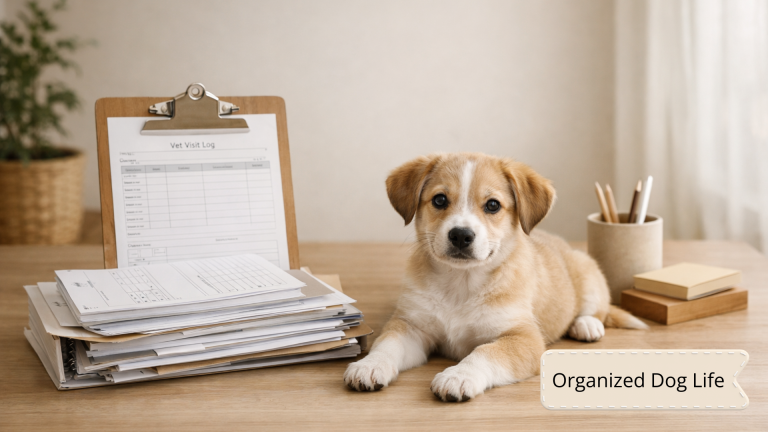

Bringing a new puppy home means paperwork arrives quickly and from many different directions.
Having a clear new puppy records checklist from the start helps you track everything without losing important documents in a drawer.
What This List Is For:
This list helps you identify and organize all the paperwork, records, and registrations that come with a new puppy so nothing gets missed or misplaced.
📄 You can find many of these blank record pages inside the printable Dog Records Organizer, which you can personalize to your own puppy’s needs.
Many dog owners keep their dog records together using a structured binder system.
What Is A Dog Records Organizer?
The Dog Records Organizer is a structured binder system designed to keep dog records, care logs, and important paperwork together in one place so information can be located quickly when it is needed.
Below are the details typically included on a new puppy records checklist.
Information to Include in a New Puppy Records Checklist
Breeder or Adoption Source Information
When your puppy arrives, the first records to organize are those tied to where they came from.
This information is specific to the puppy stage and is unlikely to be needed again once your dog is fully established.
Still, it’s important to have on file for registration purposes, health history questions, and breed club documentation.
- Breeder name and contact information
- Kennel name and registration number
- Rescue organization or shelter name and address
- Adoption counselor or contact name
- Adoption or purchase date
- Litter registration number (if applicable)
- Contract or adoption agreement document
Keeping this information together means you always have the source details on hand when completing registration paperwork.
For a dedicated record page, see the Puppy Breeder Information Record.
Puppy Identification Records
Identification documents should be stored together from the start and kept permanently as part of your dog’s file.
These are the records you will reference most often throughout the first year and beyond.
- Registered name and call name
- Date of birth
- Breed or breed mix
- Sex
- Coat color and distinguishing markings
- Microchip number and registry name
- Microchip registry confirmation
A note of your puppy’s physical description helps with ID verification at boarding facilities, grooming appointments, and veterinary offices.
For a full identification record page, see the Puppy Information Sheet Template and the Puppy Microchip Record.
Registration and Licensing Records
Some registrations are required by local law and others are breed or club related. Both belong in your new puppy paperwork checklist from the start.
Licensing requirements vary by county and city, so noting your specific jurisdiction helps when renewal time arrives.
- City or county dog license number and renewal date
- License tag number
- AKC or UKC registration number if applicable
- Breed club membership or registration details
- Microchip registry confirmation number
- State or county registration requirements noted
- Renewal calendar dates recorded
This is one of the most time-sensitive sections of your puppy documentation checklist since many jurisdictions require licensing within the first weeks of ownership.
Vaccination and Preventative Care Records
Your first-year puppy records will include a series of vaccinations given at scheduled intervals, making this one of the most active sections of your new puppy records.
Tracking each vaccination as it is completed ensures you always have current documentation ready for boarding facilities, training programs, and travel requirements.
- DHPP vaccination dates and next due dates
- Bordetella vaccination date
- Rabies vaccination date and certificate number
- Leptospirosis vaccination date if recommended
- Flea and tick prevention product name and start date
- Heartworm prevention product name and start date
- Fecal test date and result
Each entry should include the date administered, product name, lot number, and next due date. For a dedicated vaccination log, see the Puppy Vaccination Record Template.
Veterinary Clinic and Visit Records
Your puppy’s veterinary relationship begins immediately, often within the first week of coming home.
Recording clinic contact details alongside early visit notes keeps your puppy documentation checklist complete from the very first appointment.
- Veterinary clinic name and address
- Primary veterinarian name
- Clinic phone number and after-hours emergency line
- First wellness exam date and weight recorded
- Findings or notes from each early visit
- Any conditions flagged at initial appointments
- Next scheduled appointment date
Having the clinic emergency line recorded separately from general contact details is a practical habit to establish early. For a full visit log, see the Puppy Vet Visit Log Template.
Spay or Neuter Records
If your puppy is scheduled to be spayed or neutered, this paperwork becomes a permanent part of their health file.
This is a puppy-stage milestone with its own set of documents that do not apply to an established adult dog record system.
- Scheduled procedure date
- Veterinary clinic or surgical center name
- Surgeon name
- Pre-surgical exam date and clearance noted
- Procedure completion date
- Post-operative care instruction document filed
- Follow-up appointment date
Once the procedure is complete, the surgical record and post-operative notes should be filed permanently alongside other veterinary documentation.
Insurance Records
Pet insurance enrollment typically happens in the first weeks of ownership, making it a natural part of new puppy paperwork rather than general dog record keeping.
Your new puppy records checklist should include a dedicated section for policy details from the day coverage begins.
- Insurance provider name
- Policy number
- Coverage start date
- Monthly premium amount
- Deductible amount and reimbursement percentage
- Customer service contact number
- Claim submission process and portal link
Keeping your policy documents alongside your other records means coverage details are easy to locate when an appointment or claim arises.
Training Enrollment Records
While this blog does not cover training itself, documenting enrollment and program completion is a legitimate part of puppy record-keeping.
A training record creates a documented timeline of your puppy’s first year that sits alongside their health and identification paperwork.
- Training school or program name
- Trainer name and contact information
- Class start and end dates
- Class level or program name
- Sessions attended and completed
- Certificate of completion if issued
- Next class or program enrolled
Having this on file is useful when boarding facilities or training programs ask about prior socialization or class history.
Puppy Supply and Setup Records
A complete new puppy paperwork checklist can also include a setup record for reference and replacement purposes.
Recording your initial supply details saves time when items need replacing or when your setup changes as your puppy grows.
- Crate size and brand at time of purchase
- Collar size and type at time of purchase
- Food brand and formula at time of transition home
- Feeding schedule at each growth stage
- Bedding and sleeping setup details
- Initial supply list completion date
- Any vet-recommended supply notes
These details are also helpful when someone else is caring for your puppy and needs to know the current setup. For a full supply reference page, see the Puppy Supply Inventory Checklist.
Emergency and Contact Information Records
Your new puppy records should include emergency contacts and alternate care information from day one, before they are ever needed.
This section is worth completing during the first week, not after an urgent situation has already arisen.
- Emergency veterinary clinic name and address
- 24-hour emergency clinic phone number
- Poison control hotline number
- Backup caregiver name and contact details
- Pet sitter name and contact information
- Trusted neighbor or nearby contact for emergencies
- Out-of-town owner contact details
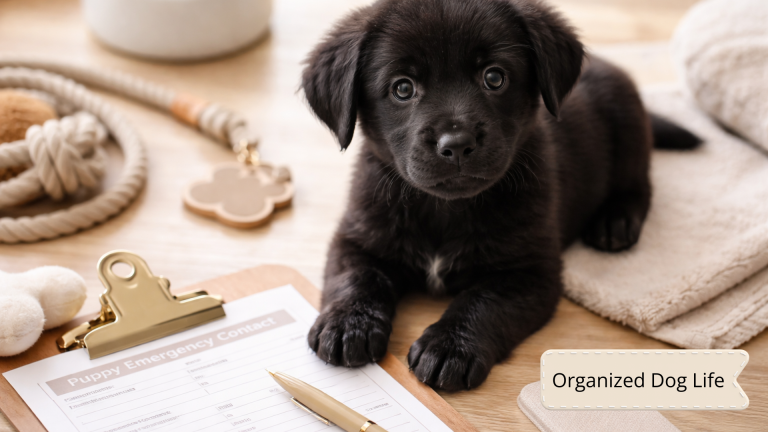
For a dedicated record page, see the Puppy Emergency Contact Sheet.
Puppy Milestone and Growth Log
A simple milestone log is one of the most useful additions to a new puppy records checklist, giving you a documented administrative timeline of the first year in one place.
This is not a health record but a reference summary of when key registrations, procedures, and firsts were completed.
- Date puppy came home
- First veterinary visit date and weight
- First vaccination series completed date
- Microchip registration confirmed date
- City or county license obtained date
- Spay or neuter procedure date
- First boarding or pet sitter stay date
This section functions as a quick-reference overview of all the key administrative milestones in your puppy’s first year.
For a month-by-month tracking structure, see the Puppy Monthly Care Checklist and the Puppy Care Calendar Template.
Keeping Your New Puppy Records Organized Long-Term
A new puppy records checklist gives you a clear starting point, but the sections covered here are specific to the puppy stage and are separate from the broader ongoing records you will maintain throughout your dog’s life.
Once your puppy’s first-year documentation is complete, those records become the foundation of a full dog records system that covers veterinary history, preventative care, and routine logs going forward.
For an overview of all the records worth keeping across your dog’s entire life, the Dog Records Checklist covers the complete ongoing system that builds on everything established here.
If you would like a structured place to keep all of your dog’s records, the Dog Records Organizer brings every log, checklist, and record page together in one printable binder.