
Keeping a consistent record of your dog’s vet visits is one of the most responsible things you can do as a dog owner.
A dog vet visit log template gives you a clear, repeatable format so nothing important gets missed or forgotten between appointments.
What This List Is For:
This list helps you understand exactly what information to document each time your dog visits the veterinarian.
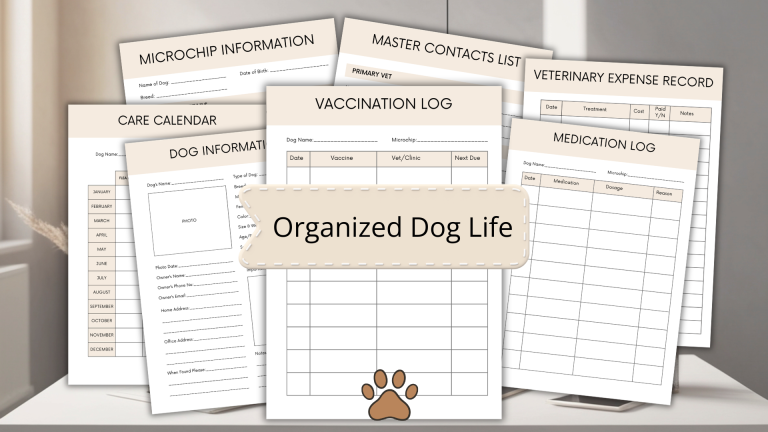
📄 You can find a blank Vet Visit Log inside the Dog Records Organizer, which you can personalize to your own needs.
Some dog owners store this sheet in the Medical Section of their organizer to keep essential dog record details easy to reference.
What Is A Dog Records Organizer?
A dog records organizer is a simple way to keep your dog’s important paperwork and information together in one organized place. For a full overview of how the system works, visit our Dog Records Checklist guide.
Below are the details typically included on a dog vet visit log template.
Information to Include in a Dog Vet Visit Log Template
Dog Identification Details
Every entry in your vet visit log should begin with your dog’s basic profile information.
This ensures the record remains accurate even years later, especially if you switch vets or share records with a boarding facility.
- The dog’s full name
- Breed
- Date of birth or estimated age
- Sex and spay/neuter status
- Microchip number
- Weight at time of visit
Having this section filled in at the top of each log page keeps your dog’s identity tied clearly to every record.
Appointment Basics
The core of any vet visit log is a clean record of the appointment itself.
This section captures the essential administrative details that help you track your dog’s care history over time.
- Date of appointment
- Veterinary clinic name
- Veterinarian’s name
- Clinic phone number
- Appointment type (routine wellness, follow-up, urgent care)
- Scheduled by (owner, referral, reminder call)
Logging the clinic name and attending vet separately is useful if your dog sees more than one provider.
Reason for the Visit
Your vet appointment log for dogs should include a dedicated space for documenting why the appointment was scheduled.
This helps you spot patterns across visits and gives context to any treatments that follow.
- Primary reason for visit
- Symptoms or concerns noted at home
- Duration of any symptoms before the appointment
- Whether this was a recurring issue or first occurrence
- Referral or specialist reason, if applicable
One or two sentences written in plain language is all this section requires.
Veterinarian’s Observations
This section of your dog vet visit record captures what the veterinarian noted during the examination.
You do not need medical expertise to fill this in; simply record what was communicated to you during the appointment.
- General health assessment noted by the vet
- Any physical findings mentioned
- Weight change compared to last visit
- Areas of concern flagged for monitoring
- Any diagnostic tests recommended or completed
Write what was said to you in straightforward language and leave interpretation to the professionals.
Treatments and Procedures Administered
A complete dog medical records log includes a clear record of anything that was done during the visit.
This section is important for insurance claims, future reference, and boarding facility documentation.
- Vaccines given (including product name and lot number if provided)
- Medications administered during the appointment
- Procedures performed
- Lab work completed
- Results discussed at the appointment
If your vet provides a printed visit summary, staple it behind this log page as a supporting record.
Prescriptions and Medications Sent Home
Many vet visits result in take-home medications or supplements.
Recording these details separately from what was administered in-clinic prevents confusion and makes it easy to track dosing schedules.
- Medication name
- Dosage prescribed
- Frequency and duration
- Dispensing pharmacy or clinic
- Refill instructions provided
- Any food or activity restrictions noted
This section pairs well with a dedicated medication tracker, which is also included in the Dog Records Organizer.
Follow-Up Instructions
One of the most important sections of any vet visit tracker for dogs is a clear record of what happens next.
This information is easy to forget by the time you get home, so writing it down immediately after the appointment is essential.
- Follow-up appointment date, if scheduled
- Monitoring instructions given by the vet
- Warning signs to watch for (as communicated by the vet, recorded in your own words)
- Activity or diet adjustments recommended
- When to call the clinic if needed
Keeping this section filled in reduces the chance of a follow-up falling through the cracks.
Vaccination and Preventative Care Recorded
Your dog vet visit log template should capture preventative care details separately so they are easy to reference for boarding, travel, or licensing requirements.
This protects you from having to call the clinic every time someone asks for proof of vaccination.
- Vaccine name
- Date administered
- Next due date
- Administering veterinarian
- Lot number (if listed on documentation)
- Rabies tag number (if applicable)
Many dog owners find it helpful to keep a separate vaccination log alongside this visit log, both of which are included in the Dog Records Organizer.
Cost and Payment Record
A dog care records organizer is not complete without a basic financial log for each visit.
Tracking appointment costs helps with annual budgeting, insurance reimbursement, and expense planning.
- Total invoice amount
- Payment method used
- Insurance claim submitted (yes/no)
- Claim reference number
- Reimbursement received
- Outstanding balance, if any
This information links naturally to a separate dog expense tracker for a full picture of your annual care costs.
Specialist or Referral Information
If your vet recommends a specialist or external provider, that information belongs in your dog’s health records binder alongside the original visit record.
- Referring veterinarian’s name
- Specialist clinic name and address
- Reason for referral
- Referral paperwork provided (yes/no)
- Appointment scheduled with specialist (yes/no)
- Specialist contact details
Keeping referral details attached to the visit record where they originated makes it easy to follow the thread across multiple providers.
Notes and Observations
Every dog vet visit log template benefits from a free-form notes section at the end.
This space is for anything that does not fit neatly into another category but matters to you as the owner.
- Questions you asked during the appointment
- Answers or explanations you want to remember
- Behavioral observations you mentioned to the vet
- Anything the vet said about long-term monitoring
- Personal reminders to follow up
A short paragraph or a few bullet points in your own words is enough to make this section useful.
How to Use a Dog Vet Visit Log Over Time
A dog vet visit log template is most valuable when it is filled in consistently after every appointment, not just the major ones.
Routine wellness visits, quick weight checks, and follow-up calls all deserve a record. Over time, a complete log gives you a clear picture of your dog’s care history that no single clinic visit summary can replicate.
The Dog Records Organizer includes a dedicated Vet Visit Log page designed to make this process simple and repeatable, no matter how often your dog sees the vet.