

Registering a dog involves more paperwork than most new owners expect.
Between municipal licenses, kennel club registration, microchip records, and proof of vaccinations, it is easy to lose track of what you have, what you still need, and where everything is filed.
What This List Is For:
This checklist walks through the documentation typically involved in registering a dog and keeping those records organized over time.
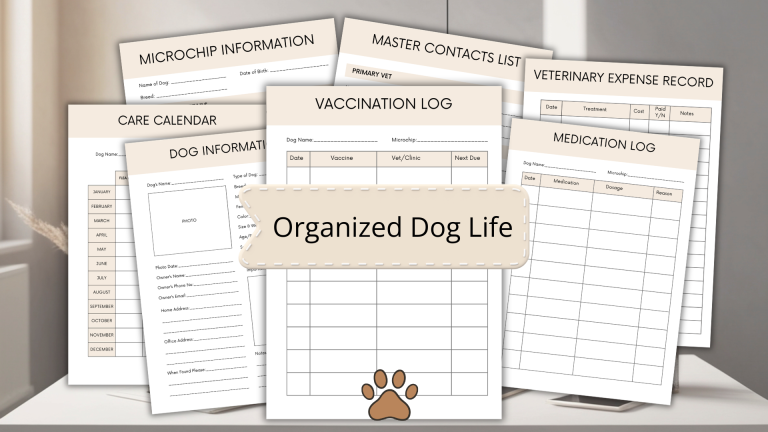
📄 You can find a blank Dog Registration Papers record page inside the Dog Records Organizer, which you can personalize to your own needs.
Some owners place this sheet inside the Dog Profile Section of their organizer so essential dog record details stay organized and simple to reference.
The Dog Records Organizer is a structured binder system designed to keep all of your dog’s documentation organized in one place. You can read more about how it works on the Dog Records Organizer hub page.
Below are the details typically included on a dog registration papers checklist.
Information to Include in a Dog Registration Papers Checklist
Municipal License Details
Most cities and counties in the United States require dogs to be licensed through a local authority, such as animal control or a humane society.
This section records everything connected to that license.
- Dog license number
- Issuing authority name and contact information
- License issue date and expiration date
- Annual renewal date
- Fee amount paid
- License tag number
- Notes on where the physical tag is stored
Keeping this section current means you always know when renewal is due and where to contact if the tag is lost.
Kennel Club Registration
If your dog is registered with a recognized kennel club such as the AKC or CKC, this section captures those details.
Not every dog will have a Kennel Club registration, but for those that do, the paperwork is worth tracking carefully.
- Registry name (AKC, CKC, UKC, or other)
- Registration number
- Registered name of the dog
- Registration certificate date
- Certificate storage location
- Litter registration number, if applicable
- Breeder name as listed on the certificate
This information is useful for travel documentation, breed-specific programs, and future record requests.
Microchip Records
Microchip registration is one of the most important pieces of dog ownership paperwork to keep organized.
The chip itself is only useful if the registration details are current and accessible.
- Microchip number
- Microchip brand or manufacturer
- Date of implantation
- Implanting veterinarian or clinic
- Registry name (such as Found Animals or PetLink)
- Registry account login or reference number
- Date registration was last updated
It is worth recording both the chip number and the registry details, as these are sometimes stored separately.
Proof of Ownership Documents
Proof of ownership is not always a single document. It’s typically built from a combination of records that together confirm you are the dog’s legal owner.
- Bill of sale or adoption contract
- Date of purchase or adoption
- Breeder or shelter name and contact details
- Purchase price or adoption fee (useful for insurance purposes)
- Transfer of ownership certificate if the dog was previously registered to another owner
- Any co-ownership documentation
- Date ownership was formally transferred
Keeping copies of these documents in your binder alongside digital backups is a practical habit worth building from the start.
The Dog Records Organizer includes a blank Registration page if you prefer a structured version ready to print and fill in.
Rabies Vaccination Certificate
A current rabies vaccination certificate is required for municipal licensing in most US states and is one of the most frequently requested pieces of dog ownership paperwork.
- Vaccine brand name
- Date administered
- Administering veterinarian name and clinic
- Certificate number if shown
- Expiration date of current vaccine
- Next due date
- Storage location of the physical certificate
Some states require a one-year certificate initially, with three-year certificates available after the first booster. Recording the type issued prevents confusion at renewal time.
Spay or Neuter Documentation
Many municipalities offer reduced licensing fees for dogs that have been spayed or neutered.
This section records the documentation that supports that status.
- Procedure date
- Performing veterinarian name and clinic
- Certificate or letter of confirmation
- Date submitted to licensing authority
- Reduced fee confirmation or reference number
- Storage location of the physical document
If this documentation is ever requested again for a license renewal, having it filed and referenced here saves time.
Pedigree Papers
Pedigree documentation applies to purebred dogs with a recorded lineage.
Not every dog will have a pedigree, but for those that do, these papers are worth carefully storing and referencing.
- Pedigree certificate number
- Issuing registry
- Number of generations listed
- Date of issue
- Breeder name as recorded
- Storage location of the physical certificate
- Digital backup location
Pedigree papers are not updated over time, but they are occasionally needed for breed programs or future registration requests.
DNA Test Records
DNA testing has become increasingly common, and some registries now accept DNA results as supporting documentation.
This section tracks those results if applicable.
- Testing company name (such as Embark or Wisdom Panel)
- Date sample was submitted
- Date results were received
- Primary breed composition as reported
- Reference or report number
- Storage location of results
- Whether results were submitted to any registry
Even if DNA results were taken out of personal interest rather than for registration purposes, recording them here keeps everything connected.
Import or Export Paperwork
Dogs brought into the United States from another country or transported internationally require specific documentation.
This section applies only to dogs with international travel history.
- Country of origin
- Import permit number if applicable
- USDA health certificate reference
- Date of entry into the United States
- Customs or border documentation reference
- Rabies titer test results if required
- Storage location of all related documents
Import documentation can be difficult to replace, so keeping a clear record of what was issued and where it is stored is especially important.
Record Storage and Access Notes
This final section is a practical addition that turns your checklist into a functional filing reference.
It records where everything is physically and digitally stored so that any household member can locate documents quickly.
- Location of physical binder or file
- Digital backup platform and folder name
- Which documents have been scanned
- Date records were last reviewed and updated
- Emergency access instructions for other household members
- Name and contact details of the person responsible for maintaining records
A records system is only useful when it can be accessed quickly, including during a stressful situation such as a lost dog or a move.
Keeping your dog registration papers organized in one place means you are never searching through drawers or email inboxes when a document is needed.
Whether you are renewing a municipal license, updating a microchip registry, or preparing for travel, having a structured checklist makes the process straightforward.
If you would like a ready-made system for keeping all of your dog’s records organized, the Dog Records Organizer brings everything together in one structured, printable binder.