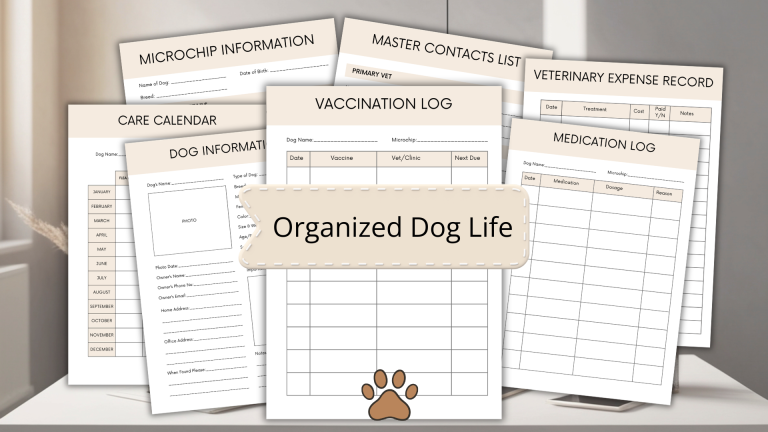


If your dog takes any kind of medication, having a dedicated place to record the details makes every part of their care easier to manage.
What This List Is For:
This list helps you understand what information to include in a dog medication log template so your records are complete, consistent, and easy to reference.
📄 You can find a blank Dog Medication Log inside the Dog Records Organizer, which you can personalize to your own needs.
Some owners place this sheet inside the Health Section of their organizer so essential dog record details stay organized and simple to reference.
What Is A Dog Records Organizer?
A dog records organizer keeps all the important paperwork and details about your dog together in one organized place. For a full overview of how the system works, visit our Dog Records Checklist guide.
Below are the details typically included in a dog medication log template.
Information to Include in a Dog Medication Log Template
Dog and Owner Identification
Every medication log page should start with basic identification details.
This ensures the log stays connected to the right dog, especially in households with multiple pets or when records are shared with a boarding facility or pet sitter.
- Dog’s full name
- Breed and date of birth
- Owner’s name
- Primary veterinary clinic name
- Vet’s phone number
- Date the log was started or updated
Having this information at the top of the page means anyone reading the record knows exactly which dog it belongs to.
Medication Name and Type
Recording the full name of each medication is essential for clarity.
Your dog’s medication record should document this separately for each medication being administered.
- Full medication name as written on the label
- Generic name if different from the brand name
- Medication type (tablet, capsule, liquid, topical, injection)
- Reason for use as noted by the vet (for example: flea prevention, joint support, post-surgery care)
- Whether the medication is a prescription or an over-the-counter product
- Prescribing the veterinarian’s name
Including the medication type alongside the name helps avoid confusion if a different caregiver is administering it.
Dosage Information
A complete dog medication tracker records the exact dosage details given by your veterinarian.
This section is one of the most important parts of any pet medication log.
- Dosage amount (for example: 50mg, 1 tablet, 5ml)
- Number of doses per day
- Specific times doses are scheduled (morning, midday, evening)
- Whether the medication should be given with food or on an empty stomach
- Any special handling instructions noted by the vet
- Maximum daily amount if applicable
Accurate dosage details help ensure consistent administration across different caregivers and days.
Prescription and Pharmacy Details
A good dog prescription log includes the administrative details tied to the prescription itself.
These details are useful for refills, insurance claims, and vet follow-ups.
- Prescription number
- Prescribing clinic name and address
- Pharmacy or supplier name
- Pharmacy phone number or website
- Date prescription was issued
- Number of refills authorized
Keeping pharmacy details alongside the prescription information saves time when a refill is needed.
Start Date and End Date
Your dog medication schedule log should clearly document when each course of medication begins and ends.
This is especially important for time-limited prescriptions.
- Date the medication was first administered
- Scheduled end date if applicable
- Total length of the medication course
- Whether the medication is ongoing with no planned end date
- Date of the last dose given
- Any gaps or interruptions in the schedule
Recording start and end dates makes it easier to confirm whether a full course was completed.
Refill Tracking
Tracking refills as part of your dog medication record helps you stay ahead of running out, particularly for ongoing medications.
- Date each refill was requested
- Date each refill was picked up or delivered
- Quantity received with each refill
- Refill number (for example: Refill 1, Refill 2)
- Remaining refills authorized on the prescription
- Next scheduled refill date
A simple refill log prevents gaps in medication and reduces last-minute trips to the pharmacy.
Dose Administration Log
A daily dose log is the most active part of a dog medication tracker. This section is filled in each time a dose is given.
- Date of each dose
- Time dose was administered
- Initials or name of the person who gave the dose
- Method of administration if it varies (mixed with food, given as pill, applied topically)
- Any difficulty during administration (for example: dog refused, partial dose given)
- Notes column for anything unusual on that day
A daily log is especially useful when multiple people share care responsibilities.
Side Effect and Reaction Notes
Your dog medication log template should include a designated space to note anything that seems different during the medication period.
This is not a diagnosis section; it is a documentation section for observations to share with your vet.
- Date of any observed change
- Description of the observation (for example: less appetite, more tired than usual)
- Time of day the change was noticed
- Whether the observation continued or resolved
- Whether the vet was contacted
- Vet’s response or follow-up instruction if noted
Keeping observational notes organized means you have something concrete to share at your next appointment.
Vet Follow-Up Appointments
Many medications require follow-up appointments to assess progress.
A pet medication log should connect medication records to any related vet visits.
- Scheduled follow-up appointment date
- Purpose of the follow-up (for example: recheck, blood work, weight check)
- Outcome or notes from the follow-up
- Whether the medication was continued, adjusted, or discontinued
- Date of any prescription changes made at follow-up
- Next scheduled appointment if applicable
Linking medication records to vet visits creates a clearer picture of your dog’s overall care history.
Medication Cost Tracking
Including a cost column in your dog medicine tracking sheet is a practical addition, especially for long-term prescriptions or multiple medications.
- Cost per refill or purchase
- Date of each purchase
- Payment method or insurance claim reference number
- Whether any portion was reimbursed through pet insurance
- Annual total cost for that medication
- Notes on any price changes
Cost tracking can also support insurance claim submissions and annual expense summaries.
Medication Storage Notes
Storage details are easy to overlook but worth including in a complete dog medication log template.
Keeping this information on the record page reduces the chance of errors.
- Required storage conditions (for example: refrigerate, store at room temperature, keep away from light)
- Expiration date on the current supply
- Location in the home where medication is stored
- Any specific disposal instructions if medication is discontinued
- Whether original packaging should be retained
- Restocking reminder date based on current supply
Proper storage information is especially useful when a different caregiver is looking after your dog.
Discontinued Medications
A complete medication history includes medications that are no longer in use.
Your dog medication record should have a section for archiving this information.
- Medication name
- Dates it was used (start and end)
- Reason it was discontinued
- Whether it was completed as prescribed, stopped early, or replaced
- Name of the replacement medication if applicable
- Vet who authorized the change
Keeping discontinued medication records means your dog’s full history is available when needed, not just current prescriptions.
Keeping Your Dog Medication Log Organized Over Time
A dog medication log template works best when it is updated consistently and kept in a predictable location.
Whether your dog is on one medication or several, having a dedicated log page for each one keeps the records clear and easy to hand off to a vet, a pet sitter, or an emergency contact.
Over time, a complete medication record becomes one of the most practical documents in your dog’s paperwork.
The Dog Medication Log page inside the Dog Records Organizer gives you a ready-to-use format for recording all of this information in one structured place.