

Boarding a puppy for the first time involves more preparation than most owners expect.
Beyond packing a bag, you need to pull together vaccination records, medication instructions, emergency contacts, feeding schedules, and a clear summary of your puppy’s daily care routine, all in a format that boarding staff can actually use.
What This List Is For:
This checklist helps you gather, organize, and document every piece of information a boarding facility will need to care for your puppy confidently while you are away
📄 You can find a blank Boarding Checklist page inside the Dog Records Organizer, which you can personalize to your own needs.
Some owners place this sheet inside the Travel & Boarding Section of their organizer so essential dog record details stay organized and simple to reference.
What Is A Dog Records Organizer?
A dog records organizer keeps your dog’s key paperwork and information organized together so it’s easy to find when you need it. For a full overview of how the system works, visit our Dog Records Checklist guide.
Below are the details typically included on a complete puppy boarding checklist.
Information to Include on a Puppy Boarding Checklist
Puppy Identification Information
Before your puppy’s first boarding stay, a facility needs to confirm who your puppy is and how to identify them.
This section captures the basics that every boarding intake form will ask for.
- Puppy’s full name and breed
- Date of birth or approximate age
- Color, markings, and distinguishing features
- Microchip number and registry name
- Collar tag details and current ID tag phone number
- Spayed or neutered status
Having this information written down in advance means you are not scrambling to find a microchip number at drop-off.
Vaccination Records and Health Documentation
Most boarding facilities require proof of current vaccinations before they will accept a puppy.
Knowing which documents to bring ahead of time prevents a last-minute visit to your vet.
- Rabies vaccination date and expiration
- Bordetella (kennel cough) vaccination date
- Distemper/parvo combination vaccination date
- Leptospirosis vaccination date if applicable
- Heartworm test date and result
- Flea and tick prevention product name and last application date
Keep copies of these records in your puppy’s boarding folder so you can produce them quickly whenever they are needed.
Veterinarian Contact Information
Boarding staff need to know who to call if a health question comes up during your puppy’s stay.
This section of your puppy boarding preparation checklist ensures that information is clear and immediately accessible.
Want a Ready Made Version?
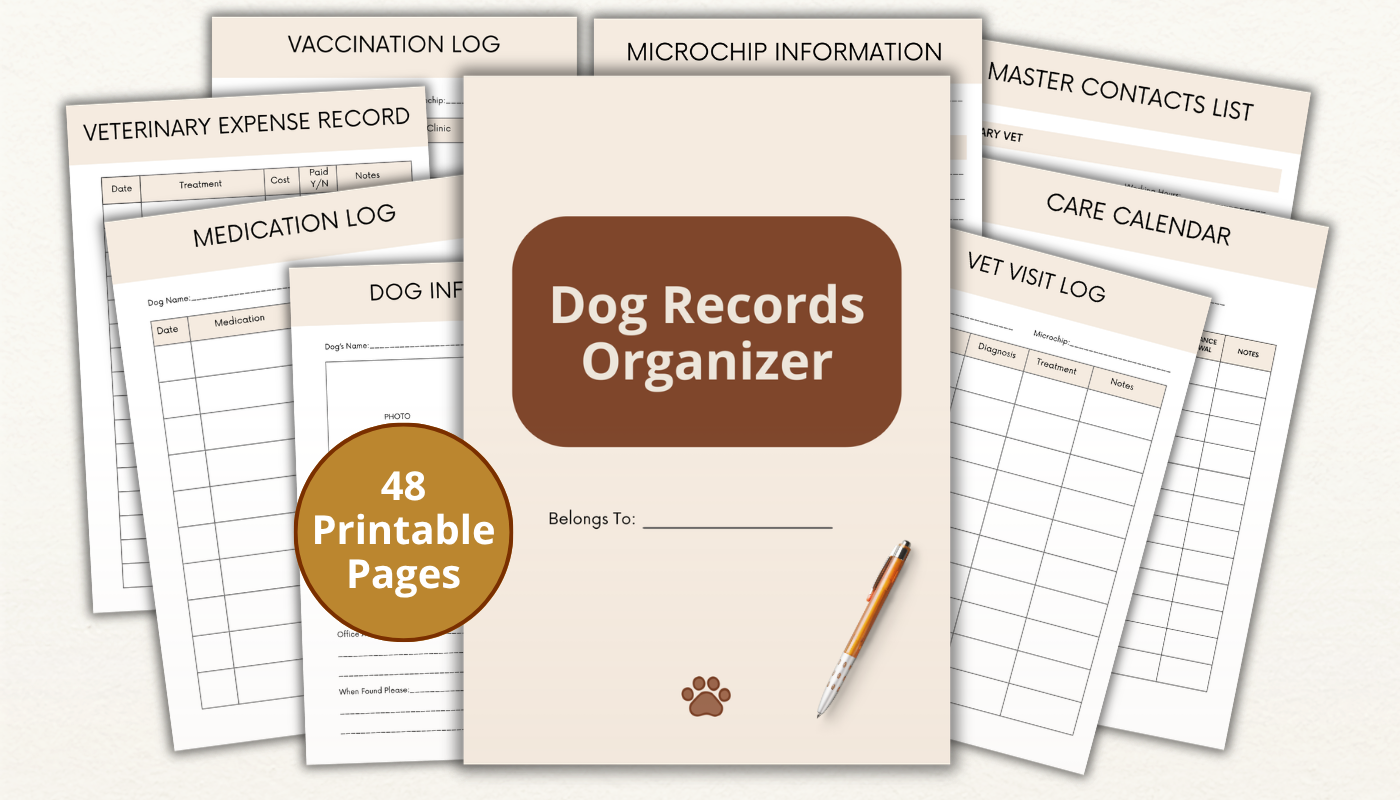
The Dog Records Organizer consists of 27 printable checklists and trackers - over 48 pages - to help keep your dog records neatly organized in one safe place.
Learn More About The Organizer- Primary vet clinic name, address, and phone number
- Vet’s name if your puppy sees a specific provider
- After-hours emergency clinic name and phone number
- Emergency clinic address
- Your puppy’s patient ID or account number at the clinic
- Authorization to seek emergency care in your absence
Providing written authorization for emergency care is especially important for puppies, as facilities may be hesitant to act without explicit permission from the owner.
If you are also building out your puppy’s health documentation, a puppy vet visit log is a useful companion record to keep alongside your boarding paperwork.
Owner and Emergency Contact Details
Boarding facilities need a reliable way to reach you during the stay, along with a backup contact in case you are unavailable.
This is a standard section on most puppy boarding paperwork.
- Your full name, phone number, and email address
- Your travel destination and accommodations name if applicable
- Dates of travel and expected return date and time
- Secondary emergency contact name and relationship
- Secondary contact phone number and availability
- Permission level for emergency contact: pickup authorization or medical decisions
If you are traveling internationally or will have limited cell service, note that clearly so staff know the best way to reach you.
Feeding Schedule and Food Instructions
A sudden change in diet can cause digestive upset in puppies, so providing detailed feeding instructions is one of the most important parts of first-time boarding a puppy.
Facilities need to replicate your routine as closely as possible.
- Food brand and product name
- Amount per meal in cups or grams
- Number of meals per day and timing
- Any food allergies or intolerances
- Treats that are approved and any that are not allowed
- Whether your puppy is on a raw, wet, or prescription diet
Pre-portioning meals into labeled bags or containers before drop-off makes it easier for staff to follow your exact routine without guessing.
Medication Instructions for Boarding
If your puppy takes any regular medications, supplements, or preventatives during their stay, the boarding facility needs complete written instructions.
Verbal instructions at drop-off are easy to miss or misremember.
- Medication name and what it is prescribed for
- Dosage amount and unit
- Frequency and timing of each dose
- Administration method: pill, liquid, topical, or mixed with food
- Whether refrigeration is required
- Known side effects staff should be aware of
Bring medications in their original labeled containers whenever possible.
If a medication requires a specific technique to administer, include a note explaining that alongside the bottle.
Daily Routine and Behavioral Notes
Puppies do best in boarding when staff understand their normal daily rhythm and any behavioral tendencies.
This section of your puppy boarding information sheet helps caregivers anticipate your puppy’s needs rather than react to them.
- Morning and evening routine summary
- Nap schedule if your puppy has a predictable rest pattern
- Exercise needs: number of walks and energy level
- Crate training status and comfort level with confinement
- Known triggers or stressors: sounds, other dogs, strangers, or specific situations
- Commands your puppy reliably responds to
The more specific this section is, the easier it is for staff to give your puppy a consistent, calm experience.
Comfort Items and Packing List
Many facilities allow puppies to bring a small number of items from home.
Having a documented list of what you sent helps you retrieve everything at pickup and gives staff context for what belongs to your puppy.
- Blanket or sleep item description and label
- Toy names or descriptions sent with your puppy
- Whether a worn item with your scent was included
- Food and treat containers with name labels
- Collar and leash details
- Any clothing or weather gear if applicable
Check with your facility in advance about what is permitted in shared spaces versus private kennels, as policies vary.
Facility Policies and Pre-Boarding Confirmation
Before drop-off, there are several logistical details to confirm with the facility.
Documenting these on your puppy boarding preparation checklist means you have a record of what was agreed.
- Confirmed drop-off date, time, and location
- Confirmed pickup date, time, and expected pickup window
- Facility address and parking or entry instructions
- Staff contact name and direct phone number for the stay
- Policy on updates and photo check-ins during the stay
- Any optional add-ons confirmed: extra walks, enrichment, or grooming
Having a written record of these details is especially useful if your pickup schedule changes or if any questions arise during the stay.
Pre-Boarding To-Do Checklist
This section functions as a preparation checklist for the days leading up to your puppy’s first boarding stay.
Work through it in advance to avoid last-minute gaps.
- Vaccination records printed or saved digitally for easy access
- Emergency contact notified and available during your travel dates
- Puppy’s medications counted and confirmed sufficient for the stay plus two extra days
- All items labeled with your puppy’s name
- Facility deposit or payment confirmed
- Facility intake forms completed and submitted in advance
- Pre-boarding temperament evaluation scheduled if required by the facility
Completing this section a week before drop-off gives you enough time to handle anything that is missing without added stress on travel day.
Post-Boarding Notes and Follow-Up
After your puppy returns home, capturing a few notes while the stay is fresh creates a useful record for future boarding decisions.
- Overall experience: whether your puppy settled in well or showed signs of stress
- Any health observations after returning home
- Staff feedback received about behavior or temperament
- Items to bring or leave behind next time
- Whether you would rebook with the same facility
- Updated vaccination dates if boosters were due around the time of the stay
This section is easy to overlook, but a short post-stay record becomes a helpful reference the second or third time you board your puppy.
Keeping Your Puppy Boarding Records Organized
A puppy boarding checklist covers a lot of ground: identification, vaccination records, medication instructions, feeding schedules, behavioral notes, and facility logistics.
When all of that information is organized and documented in advance, drop-off is straightforward, and the boarding staff has everything they need to care for your puppy confidently.
Keeping a dedicated section in your puppy’s records binder for boarding paperwork means you are not rebuilding this from scratch every time you travel.
If keeping all of your dog’s records in one place sounds useful, the Dog Records Organizer gives you a complete printable system covering every area of dog ownership.
Ready to set up the full system?
The Dog Records Organizer consists of 27 checklists and trackers - over 50 pages in total - to help you keep your dog records safe and organized in one place.
Learn More About The Dog Records Organizer